 MATCDHAKA – Medical Assistant Training Centre in Dhaka Pharmacy, Veterinary, Dental, Nursing, Pathology, Physiotherapy and Homeopathy Training Institute in Dhaka



4 Years DMS Course Details
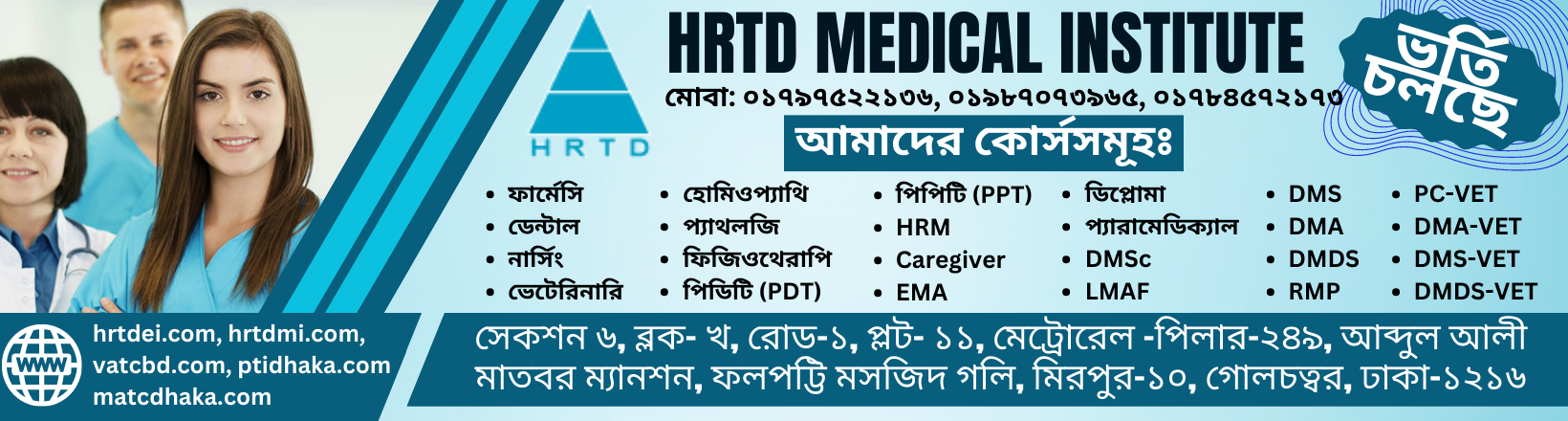
4 Years DMS Course Mobile Number 01797522136, 01987073965. Hotline- 01969947171 4 Years DMS Course is a long Diploma in Medicine & Surgery course in Bangladesh. This Course is available in HRTD Medical Institute. HRTD Medical Institute is reputed and popular for 3 Years DMA Course, Pharmacy Courses, Diploma Medical Assistant Courses, etc. HRTD Medical Institute is an organization of HRTD Limited which is Registered by the Govt of the People Republic of Bangladesh.

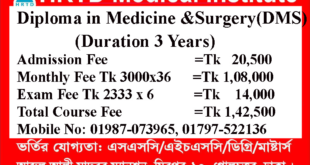
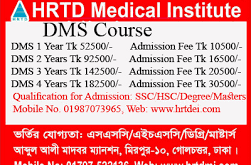
Total Cost of 4 Years DMS Course
Total Cost = 182500/-
Admission Fee = 30500/-
Monthly Fee (48×3000) = 144000/-
Exam Fee = (8×1000) =8000/-
Document for 4 Years DMS Course
3 Years DMS Course for HRTD Medical Institute Photocopy of Certificate, Photocopy of NID, Passport Size Photo 4 Pcs. Without NID, a Birth Certificate is allowed for an emergency case.
Admission Eligibility for 4 Years DMS Course
4 Years DMS Course Admission Eligibility. Mobile Number. 01987073965. 01941123488, 01797522136. SSC or Equivalent/HSC/ Degree/ Masters from any Background (Science/ Arts/ Commerce/ Technical).
Location of 4 Years DMS Course
HRTD Medical Institute, Abdul Ali Madbor Mansion, Folpotty Mosjid Goli (Bitul Mamur Jame Mosjid Goli), Plot No. 11, Metro Rail Piller No. 249, Mirpur 10 Golchattar, Dhaka.
Class System for 4 Years DMS Course
Class System for 4 Years DMS Course in Dhaka : Weekly Class 3 hours. For Job holders 3 hours in a day. The option days are Friday Morning Shift from 9:00 AM to 12:00 PM, Friday Evening Shift from 3:00 PM to 6:00 PM, Monday Morning Shift from 9:00 AM to 12:00 PM, Monday Evening Shift from 3:00 PM to 6:00 PM. Saturday Morning Shift from 10am to 1 Pm, Evening Shift from 3 pm to 6 pm.
For Regular Students Saturday 1 hour, Monday 1 hour, and Friday 1 hour. Morning Shift From 9:00 AM to 12:00 PM, and Evening Shift From 3:00 PM to 6:00 PM.
Subjects for 4 Years DMS Course
- Human Anatomy and Physiology
- Pharmacology-1
- First Aid 1& 2
- Study of OTC Drugs and Medicine
- Practice of Medicine-1
- Hematology and Pathology for Medical Practice
- Microbiology and Antimicrobial Drugs
- Study of Gastrology
- Study of Cardiology
- Study of Orthopedics
- Cardiovascular Anatomy
- Surgery
- Human Microbiology
- Neuro Anatomy
- Community Medicine
- General Chemistry
- Biochemistry
- Medical Diagnosis
- General Pathology
- Pharmacology-2
Teachers for 4 Years DMS Course
- Dr. Sakulur Rahman, MBBS, PGT, CCD
- Dr. Shamima, MBBS
- Dr. Disha, MBBS
- Dr. Tisha, MBBS
- Dr. Sanjana, BDS
- Dr. Juthi, BDS
- Dr. Keya, BDS
- Dr. Mahinul Islam, MBBS
- Dr. Antora, MBBS
- Dr. Turzo, MBBS
Practical Class for 4 Years DMS Course
Practical Works. Mobile Phone 01797522136, 01987073965. There are many practical works in the DMA 4 Years Course. The Practical works are Heart Beat, Heart Rate, Pulse, Pulse Rate, Weak Pulse, Strong Pulse, Atrial Beat, Ventricular Beat, Tachycardia, Bradycardia, Arrhythmia, Heart Sound, Normal Heart Sound, Abnormal Heart Sound, Cardiac Mur Mur, Blood Pressure, Systolic Blood Pressure, Diastolic Blood Pressure, Pulse Pressure, Mean Blood Pressure.
Hypertension, Hypotension, Hypertension Emergency, Management of Hypertension, Management of Hypotension, Management of Hypertension Emergency, IM Injection, IV Injection, SC Injection, ID Injection, Saline Pushing, Application of Eye Drops, Application of Pediatric Medicine, Emergency Respiratory Drugs, Use of Inhaler, Use of Ratahaler, Use of Nebulizer.
BMI, Normal Body Weight, Under Weight, Over Weight, Obesity, Cleaning, Dressing, Bandaging, Use of Mouth Anti Septic Mouth Wash, Use of Suppository, Use of Eye Drops, Use of Ear Drops, Use of Skin Ointment and Cream, Canulla Setting, Post Surgical Cleaning, Post Surgical Dressing, Post Surgical Bandaging, Post Surgical Pain Management. Roller Bandage, Triangular Bandage.
Making Suspension from PFS, Making Solution from ORS, Auscultation, Auscultation of Thorax, Respiratory Auscultation, Abdominal Auscultation, Percussion, Appendicitis Pulpation, Prescription Understanding, Report Understanding, X-Ray Report Understanding, Blood Test Report Understanding, Urine Test Report Understanding, ECG Report Understanding, Echo Report Understanding, ETT Report Understanding.
Human Anatomy and Physiology for 4 Years DMS Course

View all
for 4 Years DMS Course Human anatomy is the scientific study of the body’s structures, divided into gross anatomy (visible parts) and microscopic anatomy (cells, tissues via microscope). It’s studied through methods like regional (body parts), systemic (body systems like skeletal, nervous, digestive), and clinical approaches, using tools from dissection to advanced medical imaging (MRI, CT) to understand the musculoskeletal, circulatory, respiratory, nervous, and other vital systems, crucial for medicine.
মানব শারীরস্থান হল শরীরের গঠনের বৈজ্ঞানিক অধ্যয়ন, যা স্থূল শারীরস্থান (দৃশ্যমান অংশ) এবং অণুবীক্ষণ যন্ত্রের মাধ্যমে কোষ, টিস্যুতে বিভক্ত। এটি আঞ্চলিক (শরীরের অংশ), সিস্টেমিক (কঙ্কাল, স্নায়বিক, পাচকের মতো শরীরের সিস্টেম) এবং ক্লিনিকাল পদ্ধতির মাধ্যমে অধ্যয়ন করা হয়, যেখানে ব্যবচ্ছেদ থেকে শুরু করে উন্নত মেডিকেল ইমেজিং (MRI, CT) পর্যন্ত সরঞ্জাম ব্যবহার করা হয় যাতে পেশী, সংবহন, শ্বাসযন্ত্র, স্নায়বিক এবং অন্যান্য গুরুত্বপূর্ণ সিস্টেমগুলি বোঝা যায়, যা চিকিৎসার জন্য অত্যন্ত গুরুত্বপূর্ণ।
Main Branches
- Gross Anatomy (Macroscopic): Study of structures visible to the naked eye, including superficial (surface) anatomy.
- Microscopic Anatomy: Uses microscopes; includes:
- Histology: Study of tissues.
- Cytology: Study of cells.
Key Study Methods
- Regional Anatomy: Focuses on specific body areas (e.g., head, limbs).
- Systemic Anatomy: Organizes the body by functional systems (e.g., cardiovascular, nervous).
- Clinical/Applied Anatomy: Practical application for medicine.
- Medical Imaging: CT, MRI, X-ray for non-invasive views.
Major Body Systems
- Skeletal & Muscular: Bones, muscles for movement, posture, heat.
- Nervous: Brain, spinal cord, nerves for control.
- Circulatory (Cardiovascular): Heart, blood vessels for transport.
- Respiratory: Lungs, airways for breathing.
- Digestive: Mouth, stomach, intestines for nutrient processing.
- Integumentary: Skin, hair, nails for protection, sensation.
- Endocrine: Glands producing hormones.
- Urinary (Excretory): Kidneys, bladder for waste removal.
- Reproductive: Organs for reproduction.
- Immune: Defense against pathogens.
Human physiology is the scientific study of how the normal human body and its systems (like nervous, cardiovascular, digestive) function, focusing on the chemical and physical processes that keep us alive, maintain stability (homeostasis), and adapt to challenges, from molecular levels up to organs and systems working together. It’s the foundation of medicine, explaining the “how” and “why” behind bodily functions and what goes wrong in disease.
Core Concepts
- Function & Mechanism: Explores the mechanical, physical, and biochemical operations of cells, tissues, organs, and systems.
- Homeostasis: A central theme; the body’s ability to maintain a stable internal environment (e.g., temperature, blood sugar, pH) despite external changes.
- Integration: Studies how different organ systems (nervous, endocrine, respiratory, etc.) work together to achieve overall body function.
- Levels of Organization: Examines functions from atoms and molecules to cells, tissues, organs, and organ systems.
Key Organ Systems Studied
- Nervous System: Relays signals, controls responses (brain, nerves).
- Endocrine System: Regulates via hormones (glands).
- Cardiovascular System: Circulates blood (heart, vessels).
- Respiratory System: Gas exchange (lungs).
- Digestive System: Nutrient processing (stomach, intestines).
- Urinary/Excretory System: Waste removal (kidneys).
- Musculoskeletal, Reproductive, etc. .
Pharmacology for 4 Years DMS Course
for 4 Years DMS Course Pharmacology is the scientific study of drugs and chemicals, exploring how they interact with living systems to prevent, diagnose, or treat diseases, covering their origins, effects (pharmacodynamics), how the body handles them (pharmacokinetics), and their toxicology. It bridges basic sciences like biology and chemistry, involving drug discovery, development, and understanding molecular mechanisms to improve health, distinct from pharmacy, which focuses on drug use in clinical settings.
ফার্মাকোলজি হলো ওষুধ এবং রাসায়নিক পদার্থের বৈজ্ঞানিক অধ্যয়ন, যা রোগ প্রতিরোধ, নির্ণয় বা চিকিৎসার জন্য জীবন্ত ব্যবস্থার সাথে কীভাবে তারা মিথস্ক্রিয়া করে তা অন্বেষণ করে, তাদের উৎপত্তি, প্রভাব (ফার্মাকোডাইনামিক্স), শরীর কীভাবে তাদের পরিচালনা করে (ফার্মাকোকিনেটিক্স) এবং তাদের বিষবিদ্যাকে অন্তর্ভুক্ত করে। এটি জীববিজ্ঞান এবং রসায়নের মতো মৌলিক বিজ্ঞানগুলিকে সেতুবন্ধন করে, যার মধ্যে ওষুধ আবিষ্কার, উন্নয়ন এবং স্বাস্থ্যের উন্নতির জন্য আণবিক প্রক্রিয়া বোঝা জড়িত, যা ফার্মেসি থেকে আলাদা, যা ক্লিনিকাল সেটিংসে ওষুধ ব্যবহারের উপর দৃষ্টি নিবদ্ধ করে।
What Pharmacology Studies for 4 Years DMS Course
- Drug Action: How drugs bind to molecular targets (receptors, enzymes) and cause effects.
- Pharmacokinetics (ADME): What the body does to the drug (Absorption, Distribution, Metabolism, Excretion).
- Pharmacodynamics (PD): What the drug does to the body (physiological/behavioral effects).
- Toxicology: Adverse effects and mechanisms of toxicity.
- Drug Development: From identifying targets to designing and testing new medicines.
Key Areas & Sub-disciplines
- Clinical Pharmacology: Study of drugs in humans.
- Molecular Pharmacology: Focuses on molecular mechanisms of drug action.
- Neuropharmacology: Drugs affecting the nervous system.
- Cardiovascular Pharmacology: Drugs affecting the heart and blood vessels.
First Aid for 4 Years DMS Course
for 4 Years DMS Course First aid is immediate, basic care given to someone with an injury or sudden illness to preserve life, prevent worsening, and promote recovery until professional medical help arrives, ranging from simple tasks like bandaging cuts to life-saving skills like CPR, focusing on safety, assessing the scene, calling for help, and providing care like controlling bleeding or managing shock.
প্রাথমিক চিকিৎসা হলো তাৎক্ষণিক, প্রাথমিক চিকিৎসা যা আঘাত বা আকস্মিক অসুস্থতায় আক্রান্ত ব্যক্তির জীবন রক্ষা, অবনতি রোধ এবং পেশাদার চিকিৎসা সহায়তা না আসা পর্যন্ত পুনরুদ্ধারের জন্য দেওয়া হয়। এতে কাটা অংশে ব্যান্ডেজ করার মতো সহজ কাজ থেকে শুরু করে সিপিআরের মতো জীবন রক্ষাকারী দক্ষতা, নিরাপত্তার উপর মনোযোগ দেওয়া, ঘটনাস্থল মূল্যায়ন করা, সাহায্যের জন্য ডাকা এবং রক্তপাত নিয়ন্ত্রণ বা শক পরিচালনা করার মতো যত্ন প্রদান করা অন্তর্ভুক্ত।
Core Principles
- Safety First: Ensure the scene is safe for you and the victim before acting.
- Call for Help: Activate emergency services (like 911 or your local number) for serious situations.
- Assess the Victim: Check responsiveness and breathing; ask for permission to help (implied consent if unconscious).
- Personal Protection: Use gloves and eye protection to prevent disease transmission.
Common First Aid Actions for 4 Years DMS Course
- Minor Cuts/Scrapes: Clean with water/antiseptic, apply bandage.
- Burns: Cool with water, apply ointment, cover.
- Bleeding: Apply direct pressure with a clean cloth.
- Choking: Perform relief maneuvers (Heimlich).
- CPR (Cardiopulmonary Resuscitation): For stopped breathing/heartbeat, involves chest compressions and rescue breaths.
- Shock: Lay person down, elevate legs, keep warm.
- Poisoning: Follow specific guidance, call poison control.
Study of OTC Drugs for 4 Years DMS Course
for 4 Years DMS Course Studying Over-the-Counter (OTC) drugs involves analyzing their use for mild conditions (pain, cold), high prevalence of self-medication (especially NSAIDs, antacids), factors driving purchase (past use, price, accessibility), and risks like misuse (antibiotics) and interactions, particularly in developing nations where they’re first-line healthcare due to doctor unavailability, highlighting needs for education and regulation. Research focuses on knowledge, attitudes, and practices (KAP) in different populations, identifying predictors for use, and understanding sociodemographic influences.
ওভার-দ্য-কাউন্টার (OTC) ওষুধ অধ্যয়নের মধ্যে রয়েছে হালকা অবস্থার (ব্যথা, ঠান্ডা), স্ব-ঔষধের উচ্চ প্রসার (বিশেষ করে NSAIDs, অ্যান্টাসিড), ক্রয়ের কারণগুলি (অতীতের ব্যবহার, দাম, সহজলভ্যতা) এবং অপব্যবহার (অ্যান্টিবায়োটিক) এবং মিথস্ক্রিয়ার মতো ঝুঁকিগুলির জন্য তাদের ব্যবহার বিশ্লেষণ করা, বিশেষ করে উন্নয়নশীল দেশগুলিতে যেখানে ডাক্তারের অনুপস্থিতির কারণে তারা প্রথম সারির স্বাস্থ্যসেবা প্রদান করে, শিক্ষা এবং নিয়ন্ত্রণের প্রয়োজনীয়তা তুলে ধরে। গবেষণা বিভিন্ন জনসংখ্যার জ্ঞান, মনোভাব এবং অনুশীলন (KAP) এর উপর দৃষ্টি নিবদ্ধ করে, ব্যবহারের জন্য ভবিষ্যদ্বাণীকারী সনাক্তকরণ এবং সমাজতাত্ত্বিক প্রভাব বোঝার উপর দৃষ্টি নিবদ্ধ করে।
Key Areas of Study
- Prevalence & Patterns: How often people use OTCs (e.g., high in Dhaka), common types (NSAIDs, antacids, cold meds), and sources (pharmacies).
- Drivers of Use: Past experience, brand image, perceived low risk/cost, peer influence, and lack of doctor access.
- Risk Factors & Misuse: High rates of self-medicating with antibiotics, potential for serious side effects/interactions, especially for elderly, children, pregnant women.
- Sociodemographic Factors: How age, education, gender, and economic status influence choices.
- Public Health Implications: Need for better regulation, patient education, and accessible healthcare to curb misuse.
Common Research Focus
- Knowledge, Attitudes, Practices (KAP): Assessing what people know about OTCs and how they use them.
- Predictors of Use: Identifying who is most likely to self-medicate.
- Impact of Culture: Studying usage within specific cultural groups (e.g., Circassians in Jordan).
Example Findings (Dhaka, Bangladesh)
- High self-medication (83% adults).
- Most used: NSAIDs (33%), antacids (20.5%).
- Influences: Pharmacy (78.3%), peers, old prescriptions.
- Concerns: Misuse of antibiotics, need for control.
In essence, the study of OTC drugs bridges pharmacology with public health, focusing on consumer behavior, safety, and effective self-care versus harmful misuse.
Practice of Medicine-1 for 4 Years DMS Course
for 4 Years DMS Course The Practice of Medicine (POM) is a core medical subject focusing on applying clinical skills (history, exam, diagnosis, treatment) with evidence, ethics, and communication, bridging basic science with patient care, covering systems like cardiovascular, respiratory, neurology, etc., and evolving with new tech, aiming to integrate knowledge for effective, holistic patient management. It’s longitudinal, involving hands-on experience with patients, learning diagnosis, public health, and building doctor-patient trust.
চিকিৎসা অনুশীলন (POM) একটি মূল চিকিৎসা বিষয় যা ক্লিনিকাল দক্ষতা (ইতিহাস, পরীক্ষা, রোগ নির্ণয়, চিকিৎসা) প্রমাণ, নীতিশাস্ত্র এবং যোগাযোগের সাথে প্রয়োগ, রোগীর যত্নের সাথে মৌলিক বিজ্ঞানের সংযোগ স্থাপন, কার্ডিওভাসকুলার, শ্বাসযন্ত্র, স্নায়ুবিদ্যা ইত্যাদি সিস্টেমগুলিকে আচ্ছাদন করা এবং নতুন প্রযুক্তির সাথে বিকশিত হওয়া, কার্যকর, সামগ্রিক রোগী ব্যবস্থাপনার জন্য জ্ঞানকে একীভূত করার লক্ষ্যে। এটি অনুদৈর্ঘ্য, রোগীদের সাথে বাস্তব অভিজ্ঞতা, রোগ নির্ণয় শেখা, জনস্বাস্থ্য এবং ডাক্তার-রোগীর আস্থা তৈরির উপর দৃষ্টি নিবদ্ধ করে।
Core Components & Skills
- Clinical Skills: History taking, physical examination, differential diagnosis, investigations, treatment planning.
- Patient Interaction: Communication, empathy, building trust (Doctor-Patient Relationship).
- Ethical & Professionalism: Medical ethics, patient safety, legal aspects (certificates, referrals).
- Evidence-Based Medicine: Integrating personal expertise with the best available external evidence.
- Social & Population Health: Public health, health policy, nutrition, epidemiology, behavioral health.
Key Areas of Study (Systemic) for 4 Years DMS Course
- Cardiovascular System
- Respiratory System
- Gastrointestinal (GIT) & Hepatobiliary System
- Endocrinology (including Diabetes)
- Hematology (Blood Diseases)
- Neurology
- Renal & Genitourinary Diseases
- Musculoskeletal Disorders
- Infectious Diseases & Fever Management
Modern Context
- Evolution: Shaped by genetics, imaging, informatics, EMRs, requiring constant learning.
- Technology: Uses EMRs, the internet, and advanced diagnostics.
- Goal: Prevent disease, diagnose early, treat effectively, focusing on patient-centered care.
How it’s Taught
- Longitudinal courses (1st & 2nd year med students).
- Patient partnerships to share experiences.
- Clinical rotations, simulation (FOSCE), informatics, and primary care clinics.
In essence, “Practice of Medicine” is the practical, skill-based, and ethical application of medical knowledge to care for patients, encompassing everything from a simple cough to complex multi-system diseases, all while evolving with new science.
Hematology and Pathology for 4 Years DMS Course
Hematology for 4 Years DMS Course
for 4 Years DMS Course Hematology is the branch of medicine and biology focused on the study of blood, blood-forming organs (like bone marrow), and blood diseases, covering everything from red/white blood cells and platelets to plasma, diagnosing conditions like anemia, leukemia, and clotting disorders, and involves lab analysis (blood films, bone marrow biopsy) and patient care by hematologists.
হেমাটোলজি হল চিকিৎসা ও জীববিজ্ঞানের একটি শাখা যা রক্ত, রক্ত গঠনকারী অঙ্গ (যেমন অস্থি মজ্জা) এবং রক্তের রোগের অধ্যয়নের উপর দৃষ্টি নিবদ্ধ করে, যা লোহিত/শ্বেত রক্তকণিকা এবং প্লেটলেট থেকে শুরু করে প্লাজমা পর্যন্ত সবকিছুকে অন্তর্ভুক্ত করে, রক্তাল্পতা, লিউকেমিয়া এবং জমাট বাঁধার ব্যাধির মতো রোগ নির্ণয় করে এবং ল্যাব বিশ্লেষণ (রক্তের ফিল্ম, অস্থি মজ্জা বায়োপসি) এবং হেমাটোলজিস্টদের দ্বারা রোগীর যত্ন জড়িত।
Core Focus Areas
- Blood Components: Red blood cells (oxygen), white blood cells (immunity), platelets (clotting), and plasma (fluid, proteins).
- Blood-Forming Organs: Bone marrow and lymphoid tissues.
- Diseases: Anemias, leukemias, lymphomas, hemophilia, thrombophilia, and bleeding/clotting disorders (e.g., ITP, Von Willebrand).
- Processes: Hematopoiesis (blood cell formation) and hemostasis (stopping bleeding).
What Hematologists Do
- Diagnosis: Use tests like Complete Blood Count (CBC), blood film analysis, flow cytometry, cytogenetics, and bone marrow biopsies.
- Treatment: Manage conditions with medications (like factor therapies for bleeding), blood transfusions, and coordinate with oncology for blood cancers (hematology-oncology).
- Research: Study blood’s fundamental biology and develop new therapies.
Key Disciplines within Hematology for 4 Years DMS Course
- Clinical Hematology: Direct patient care.
- Hematopathology: Laboratory diagnosis of blood disorders.
- Transfusion Medicine: Safe blood donation and transfusion.
- Pediatric Hematology: Blood disorders in children.
In essence, hematology is crucial for understanding how blood works, identifying what goes wrong, and fixing it, from simple anemia to complex cancers.
Pathology for 4 Years DMS Course
for 4 Years DMS Course Pathology is the medical science of studying diseases to understand their causes (etiology), development (pathogenesis), and effects on the body, acting as a bridge between basic science and clinical medicine for accurate diagnosis and treatment. It involves examining tissues (biopsies), fluids (blood, urine), and organs (autopsies) using microscopic, chemical, and genetic methods to identify cellular/molecular changes, underpinning everything from cancer detection to infection diagnosis, with specializations like forensic, molecular, and surgical pathology.
প্যাথলজি হলো চিকিৎসা বিজ্ঞান যেখানে রোগের কারণ (এটিওলজি), বিকাশ (প্যাথোজেনেসিস) এবং শরীরের উপর প্রভাব বোঝার জন্য অধ্যয়ন করা হয়, যা সঠিক রোগ নির্ণয় এবং চিকিৎসার জন্য মৌলিক বিজ্ঞান এবং ক্লিনিকাল মেডিসিনের মধ্যে একটি সেতু হিসেবে কাজ করে। এতে কোষ/আণবিক পরিবর্তন সনাক্ত করার জন্য মাইক্রোস্কোপিক, রাসায়নিক এবং জেনেটিক পদ্ধতি ব্যবহার করে টিস্যু (বায়োপসি), তরল (রক্ত, প্রস্রাব) এবং অঙ্গ (ময়নাতদন্ত) পরীক্ষা করা হয়, যা ক্যান্সার সনাক্তকরণ থেকে সংক্রমণ নির্ণয় পর্যন্ত সবকিছুকে ভিত্তি করে, ফরেনসিক, আণবিক এবং অস্ত্রোপচারের মতো বিশেষায়িত প্যাথলজির মাধ্যমে।
What Pathology Studies for 4 Years DMS Course
- Disease Mechanisms: How diseases start and progress at cellular and molecular levels.
- Cellular Changes: Abnormalities in cell structure, function, growth (like neoplasia/cancer).
- Gross & Microscopic Changes: Visible (gross) and microscopic (histopathology) changes in tissues and organs.
- Functional Derangements: How diseases disrupt normal bodily functions.
Key Areas & Subspecialties
- Anatomical Pathology: Studies tissues (biopsies, surgical specimens) and whole bodies (autopsies).
- Clinical Pathology: Analyzes body fluids (blood, urine, etc.).
- Surgical Pathology: Diagnoses diseases from surgically removed tissues.
- Molecular Pathology: Uses genetic and molecular techniques.
- Hematopathology: Focuses on blood, bone marrow, and lymph nodes.
- Forensic Pathology: Determines cause of death in legal contexts.
Diagnostic Methods
- Biopsies & Cytology: Examining tissue/cell samples.
- Blood/Fluid Analysis: Blood tests, urine tests, etc..
- Immunohistochemistry: Using antibodies to detect specific markers.
- Molecular Tests: DNA/RNA analysis for genetic diseases.
Why It’s Important
- Underpins Patient Care: Essential for diagnosing cancer, infections, and inflammatory conditions.
- Links Science & Medicine: Connects laboratory findings to patient symptoms and treatment.
- Guides Treatment: Helps doctors choose the right therapies, including targeted treatments for cancer.
Microbiology and Antimicrobial Drugs for 4 Years DMS Course
for 4 Years DMS Course Microbiology and Antimicrobial Drugs is a crucial subject covering microbes (bacteria, fungi, viruses, parasites) and the drugs (antibiotics, antifungals, antivirals) that target them to treat infections, focusing on how these drugs work (killing vs. inhibiting), their selective toxicity, development, resistance mechanisms, and testing methods like Kirby-Bauer, vital for combating Antimicrobial Resistance (AMR).
মাইক্রোবায়োলজি এবং অ্যান্টিমাইক্রোবিয়াল ড্রাগস হল একটি গুরুত্বপূর্ণ বিষয় যা জীবাণু (ব্যাকটেরিয়া, ছত্রাক, ভাইরাস, পরজীবী) এবং সংক্রমণের চিকিৎসার জন্য তাদের লক্ষ্য করে এমন ওষুধ (অ্যান্টিবায়োটিক, অ্যান্টিফাঙ্গাল, অ্যান্টিভাইরাল) নিয়ে আলোচনা করে, এই ওষুধগুলি কীভাবে কাজ করে (হত্যা বনাম বাধা), তাদের নির্বাচনী বিষাক্ততা, বিকাশ, প্রতিরোধ ব্যবস্থা এবং কিরবি-বাউয়ারের মতো পরীক্ষা পদ্ধতি, যা অ্যান্টিমাইক্রোবিয়াল রেজিস্ট্যান্স (AMR) মোকাবেলার জন্য গুরুত্বপূর্ণ, তার উপর আলোকপাত করে।
Core Concepts
- Microbes: The study of microorganisms like bacteria, fungi, viruses, and parasites, which cause diseases.
- Antimicrobials: A broad term for agents (antibiotics, antivirals, antifungals, antiparasitics) that kill or inhibit microbes.
- Selective Toxicity: The principle of harming microbes without significantly harming host (human/animal) cells, achieved by targeting unique microbial structures/processes (e.g., cell walls).
Key Areas of Study for 4 Years DMS Course
- Mechanisms of Action: How drugs work (e.g., cell wall inhibitors, protein synthesis inhibitors).
- Drug Classes:
- Antibiotics: Target bacteria (e.g., Penicillin, Vancomycin).
- Antifungals: Target fungi (e.g., Amphotericin, Fluconazole).
- Antivirals/Antiparasitics: Target viruses/parasites.
- Drug Resistance (AMR): When microbes evolve to resist drugs, a major global health threat.
- Testing & Use:
- Kirby-Bauer Test: Disk diffusion test to assess bacterial susceptibility.
- Bactericidal vs. Bacteriostatic: Killing vs. inhibiting growth.
- History & Discovery: Evolution from natural compounds (molds) to synthetic drugs, including traditional uses.
Importance
This subject is crucial for understanding infectious diseases, developing new treatments, and implementing strategies (like using narrow-spectrum drugs) to slow the rising tide of antimicrobial resistance, ensuring effective treatment for infection
Study of Gastrology for 4 Years DMS Course
for 4 Years DMS Course Gastroenterology is the medical study of the entire digestive system (esophagus, stomach, intestines, liver, pancreas, gallbladder) and its disorders, focusing on normal function (physiology) and diseases like reflux, IBS, hepatitis, ulcers, and cancers, using both medical management and procedures like endoscopy. It’s a specialized field of medicine requiring extensive training after medical school, bridging basic science with clinical practice to diagnose and treat complex GI conditions non-surgically.
গ্যাস্ট্রোএন্টেরোলজি হল সমগ্র পাচনতন্ত্র (অন্ননালী, পাকস্থলী, অন্ত্র, লিভার, অগ্ন্যাশয়, পিত্তথলি) এবং এর ব্যাধিগুলির চিকিৎসা অধ্যয়ন, যা স্বাভাবিক কার্যকারিতা (শারীরবৃত্ত) এবং রিফ্লাক্স, আইবিএস, হেপাটাইটিস, আলসার এবং ক্যান্সারের মতো রোগের উপর দৃষ্টি নিবদ্ধ করে, চিকিৎসা ব্যবস্থাপনা এবং এন্ডোস্কোপির মতো পদ্ধতি উভয়ই ব্যবহার করে। এটি চিকিৎসার একটি বিশেষ ক্ষেত্র যার জন্য মেডিকেল স্কুলের পরে ব্যাপক প্রশিক্ষণের প্রয়োজন হয়, অস্ত্রোপচার ছাড়াই জটিল জিআই রোগ নির্ণয় এবং চিকিৎসার জন্য মৌলিক বিজ্ঞানকে ক্লিনিকাল অনুশীলনের সাথে সংযুক্ত করে।
Key Aspects of Gastroenterology for 4 Years DMS Course
- Scope: Covers the whole GI tract (mouth to rectum) and accessory organs (liver, pancreas, gallbladder, bile ducts).
- Focus Areas: Digestion, absorption, motility (movement of food), waste removal, and liver function.
- Common Conditions: Heartburn (GERD), ulcers, Celiac disease, Inflammatory Bowel Disease (IBD – Crohn’s, Ulcerative Colitis), IBS, gallstones, hepatitis, pancreatitis, polyps, and GI cancers.
- Procedures: Includes diagnostic and therapeutic tools like endoscopy (gastroscopy, colonoscopy) and managing conditions through medication.
- Related Fields: Involves understanding anatomy, physiology, pharmacology, microbiology, and even psychology as GI issues impact lifestyle.
Becoming a Gastroenterologist for 4 Years DMS Course
- Medical School: Complete an undergraduate degree (often with science focus) and then a 5-year MBBS or equivalent.
- Foundation Training: Complete foundation years (e.g., Internal Medicine Training in the UK).
- Specialty Training: Enter specialized training (ST3 level) in Gastroenterology, involving rotations in various GI areas.
What it Studies (Beyond Disease)
- Physiology: How organs work, from the stomach’s acid to the intestines’ nutrient absorption.
- Pathophysiology: The mechanisms of disease development.
- Microbiology: The gut microbiome’s role.
In essence, gastroenterology is a comprehensive medical discipline dedicated to the health of your digestive system, from the moment food enters your mouth to the elimination of waste.
Study of Cardiology for 4 Years DMS Course
Studying Cardiology involves the medical discipline focused on the heart and circulatory system, covering diagnosis, treatment, and prevention of conditions like heart failure, coronary artery disease, arrhythmias, and congenital defects. Training typically starts after general medicine (MBBS) with specialized postgraduate programs (MD, DM, Fellowships) or B.Sc. programs for technical roles, focusing on anatomy, pathology, diagnostics (ECG, echo), and procedures (catheterization, angioplasty). It’s a challenging, rewarding field with high demand for professionals in clinical, research, and technical roles.
কার্ডিওলজি অধ্যয়নের মধ্যে হৃদরোগ এবং রক্ত সঞ্চালন ব্যবস্থার উপর দৃষ্টি নিবদ্ধ করা চিকিৎসা শৃঙ্খলা জড়িত, যা হৃদরোগ, করোনারি ধমনী রোগ, অ্যারিথমিয়া এবং জন্মগত ত্রুটির মতো অবস্থার রোগ নির্ণয়, চিকিৎসা এবং প্রতিরোধকে অন্তর্ভুক্ত করে। সাধারণত জেনারেল মেডিসিন (এমবিবিএস) এর পরে প্রশিক্ষণ শুরু হয় বিশেষায়িত স্নাতকোত্তর প্রোগ্রাম (এমডি, ডিএম, ফেলোশিপ) অথবা বি.এসসি. প্রোগ্রামের মাধ্যমে, কারিগরি ভূমিকার জন্য, অ্যানাটমি, প্যাথলজি, ডায়াগনস্টিকস (ইসিজি, ইকো) এবং পদ্ধতি (ক্যাথেটারাইজেশন, অ্যাঞ্জিওপ্লাস্টি) এর উপর দৃষ্টি নিবদ্ধ করে। এটি একটি চ্যালেঞ্জিং, ফলপ্রসূ ক্ষেত্র যেখানে ক্লিনিকাল, গবেষণা এবং প্রযুক্তিগত ভূমিকায় পেশাদারদের উচ্চ চাহিদা রয়েছে।
Core Areas of Study for 4 Years DMS Course
- Anatomy & Physiology: Understanding the heart’s structure and function.
- Diseases: Coronary artery disease, heart failure, hypertension, valvular disorders, congenital heart defects, arrhythmias.
- Diagnostics: ECG, echocardiography (echo), stress tests, cardiac catheterization.
- Treatments: Medications, interventional procedures (angioplasty), pacemakers, and managing conditions like dyslipidemia.
- Specialized Fields: Cardio-oncology, pediatric cardiology, geriatric cardiology, nuclear cardiology.
Educational Pathways for 4 Years DMS Course
- Undergraduate (B.Sc.): Focuses on cardiac technology, diagnostics, and patient care (e.g., B.Sc. in Cardiology/Cardiac Technology).
- Postgraduate (MD/DM/Fellowship): For aspiring physicians, building on MBBS to become a practicing cardiologist (e.g., MD in Cardiology, DM in Cardiology).
- Other: Certificates and diplomas are also available for specialized skills.
Career Prospects for 4 Years DMS Course
- Physician Roles: Cardiologist, Interventional Cardiologist, Electrophysiologist.
- Technical Roles: Cardiovascular Technologist, Cardiac Technician.
- Settings: Hospitals, clinics, research, academia
Study of Orthopedics for 4 Years DMS Course
The study of Orthopedics, a medical specialty, focuses on the musculoskeletal system (bones, joints, ligaments, muscles, nerves) to diagnose and treat injuries, diseases (like arthritis, tumors, deformities) and conditions affecting movement, involving core anatomy, surgery, imaging (X-ray, MRI), and subspecialties like sports medicine, spinal surgery, and joint replacement. It’s a comprehensive field requiring extensive training post-MBBS, covering everything from fractures and dislocations to complex reconstruction, aiming to restore function and reduce pain.
অর্থোপেডিক্স, একটি চিকিৎসা বিশেষত্ব, পেশীবহুল কঙ্কালতন্ত্রের (হাড়, জয়েন্ট, লিগামেন্ট, পেশী, স্নায়ু) উপর দৃষ্টি নিবদ্ধ করে আঘাত, রোগ (যেমন আর্থ্রাইটিস, টিউমার, বিকৃতি) এবং নড়াচড়াকে প্রভাবিত করে এমন অবস্থা নির্ণয় এবং চিকিৎসা করার জন্য, যার মধ্যে মূল শারীরস্থান, সার্জারি, ইমেজিং (এক্স-রে, এমআরআই) এবং স্পোর্টস মেডিসিন, স্পাইনাল সার্জারি এবং জয়েন্ট প্রতিস্থাপনের মতো উপ-বিশেষজ্ঞ অন্তর্ভুক্ত। এটি একটি বিস্তৃত ক্ষেত্র যেখানে এমবিবিএস-পরবর্তী ব্যাপক প্রশিক্ষণের প্রয়োজন হয়, যা ফ্র্যাকচার এবং স্থানচ্যুতি থেকে শুরু করে জটিল পুনর্গঠন পর্যন্ত সবকিছুকে অন্তর্ভুক্ত করে, যার লক্ষ্য কার্যকারিতা পুনরুদ্ধার করা এবং ব্যথা কমানো।
Core Areas of Study for 4 Years DMS Course
- Anatomy & Physiology: Deep understanding of bones, joints, muscles, tendons, ligaments, and nerves.
- Pathology: Bone diseases (osteoporosis, tumors), joint disorders (arthritis, septic arthritis), congenital issues, nerve injuries, fractures, and dislocations.
- Diagnosis: History taking, physical exams, and advanced imaging (X-ray, CT, MRI).
- Treatment: Non-surgical (casting, medication) and surgical techniques (fracture fixation, joint replacement, arthroscopy).
- Rehabilitation: Working with therapists to restore movement.
Key Subspecialties
- Sports Medicine: Injuries in athletes (e.g., ACL tears).
- Spinal Surgery: Conditions affecting the spine (e.g., scoliosis, disc issues).
- Hand & Foot Surgery: Complex conditions of the extremities.
- Pediatric Orthopedics: Growing skeleton issues (e.g., growth plate fractures, limping child).
- Joint Reconstruction: Hip, knee, shoulder replacements.
Educational Path
- MBBS Degree: Foundational medical training.
- Orthopedic Residency: Specialized surgical training (e.g., MS or DNB in Orthopedics).
- Fellowships (Optional): Further specialization (e.g., Trauma, Spine, Sports).
In essence, orthopedics is about keeping the body’s framework strong, functional, and pain-free, utilizing both conservative and advanced surgical methods across a vast range of conditions affecting mobility.
Cardiovascular Anatomy for 4 Years DMS Course
Cardiovascular Anatomy is the study of the heart, blood vessels (arteries, veins, capillaries), and the circulatory system that pumps blood, oxygen, and nutrients throughout the body and removes waste, involving key structures like four heart chambers, four valves (tricuspid, pulmonary, mitral, aortic), major vessels (vena cavae, aorta, pulmonary artery/veins), and the pulmonary (lungs) and systemic (body) circuits.
কার্ডিওভাসকুলার অ্যানাটমি হল হৃৎপিণ্ড, রক্তনালী (ধমনী, শিরা, কৈশিক) এবং রক্ত সঞ্চালন ব্যবস্থার অধ্যয়ন যা সারা শরীরে রক্ত, অক্সিজেন এবং পুষ্টি পাম্প করে এবং বর্জ্য অপসারণ করে, যার মধ্যে চারটি হৃদপিণ্ডের প্রকোষ্ঠ, চারটি ভালভ (ট্রাইকাস্পিড, পালমোনারি, মাইট্রাল, অ্যাওর্টিক), প্রধান জাহাজ (ভেনা ক্যাভা, অ্যাওর্টা, পালমোনারি ধমনী/শিরা), এবং পালমোনারি (ফুসফুস) এবং সিস্টেমিক (শরীরের) সার্কিটের মতো গুরুত্বপূর্ণ কাঠামো জড়িত।
Key Components for 4 Years DMS Course
- Heart: A muscular pump with four chambers (right/left atria, right/left ventricles) and protective layers (pericardium, epicardium, myocardium, endocardium).
- Blood Vessels:
- Arteries: Carry blood away from the heart (e.g., aorta, pulmonary artery).
- Veins: Carry blood back to the heart (e.g., vena cavae, pulmonary veins).
- Capillaries: Tiny vessels where nutrient/waste exchange happens.
- Blood: Contains oxygen, nutrients, waste, immune cells, circulated in two main circuits.
Major Circuits
- Pulmonary Circulation: Heart (right side) to lungs (oxygenation) and back to heart (left side).
- Systemic Circulation: Heart (left side) to the rest of the body (oxygen/nutrient delivery) and back to the heart (right side).
Heart’s Electrical & Valve System
- An intrinsic electrical system controls heartbeats.
- Valves (Tricuspid, Pulmonary, Mitral, Aortic) ensure one-way blood flow, preventing backflow.
What It Covers
This subject details the structure and function, including the heart’s layers, chambers, valves, major vessels, and the path blood takes through the pulmonary and systemic circuits to maintain bodily functions.
Surgery for 4 Years DMS Course
Surgery is a core medical specialty focused on treating injuries, diseases, and disorders through manual/instrumental techniques, involving diagnosis, repair, alteration, or removal of body parts via incisions or other methods, encompassing broad areas from trauma/cancer to aesthetics, with subspecialties like Orthopedics, Urology, or Neurosurgery. As a “subject,” it’s a core part of medical education (MBBS/MD), teaching clinical skills, emergency management, basic procedures (IVs, suturing), and managing common surgical conditions like appendicitis, fractures, or abdominal issues.
অস্ত্রোপচার হলো একটি মূল চিকিৎসা বিশেষজ্ঞ যা ম্যানুয়াল/যন্ত্র কৌশলের মাধ্যমে আঘাত, রোগ এবং ব্যাধির চিকিৎসার উপর দৃষ্টি নিবদ্ধ করে, যার মধ্যে রয়েছে ছেদ বা অন্যান্য পদ্ধতির মাধ্যমে রোগ নির্ণয়, মেরামত, পরিবর্তন, অথবা শরীরের অঙ্গ অপসারণ, ট্রমা/ক্যান্সার থেকে শুরু করে সৌন্দর্যবিদ্যা পর্যন্ত বিস্তৃত ক্ষেত্রগুলিকে অন্তর্ভুক্ত করা, যার মধ্যে অর্থোপেডিক্স, ইউরোলজি, অথবা নিউরোসার্জারির মতো উপ-বিশেষজ্ঞরা অন্তর্ভুক্ত। একটি “বিষয়” হিসেবে, এটি চিকিৎসা শিক্ষার (এমবিবিএস/এমডি) একটি মূল অংশ, ক্লিনিকাল দক্ষতা শেখানো, জরুরি ব্যবস্থাপনা, মৌলিক পদ্ধতি (আইভি, সেলাই), এবং অ্যাপেন্ডিসাইটিস, ফ্র্যাকচার বা পেটের সমস্যার মতো সাধারণ অস্ত্রোপচারের অবস্থা পরিচালনা করা।
Core Concepts in Surgery as a Subject for 4 Years DMS Course
- Clinical Skills: History taking, physical examination, building patient rapport, aseptic techniques, starting IVs, wound care, managing pain.
- Common Conditions: Appendicitis, intestinal obstruction, hernias, hemorrhoids, fractures, tumors (stomach, colon), trauma (abdominal, limb).
- Procedures: Minor surgeries, assisting in major operations, interpreting investigations (X-rays, scans), endoscopy, laparoscopy.
- Emergency Care: Managing surgical emergencies like shock, bleeding, acute abdomen, and post-operative care.
- Allied Subjects: Often taught alongside related fields like Urology, Orthopedics, Anesthesia, and Surgical Pathology (examining tissues).
Areas of Surgical Specialization (Examples) for 4 Years DMS Course
- General Surgery: Broad scope, often focusing on abdomen, GI tract, breast, endocrine system.
- Orthopedics: Bones, joints, muscles, tendons (fractures, arthritis).
- Urology: Urinary tract and male reproductive system (kidney stones, BPH, cancer).
- Neurosurgery: Brain, spine, nerves.
- Cardiothoracic Surgery: Heart, lungs, chest.
- Plastic/Cosmetic Surgery: Reconstruction and aesthetics.