 MATCDHAKA – Medical Assistant Training Centre in Dhaka Pharmacy, Veterinary, Dental, Nursing, Pathology, Physiotherapy and Homeopathy Training Institute in Dhaka



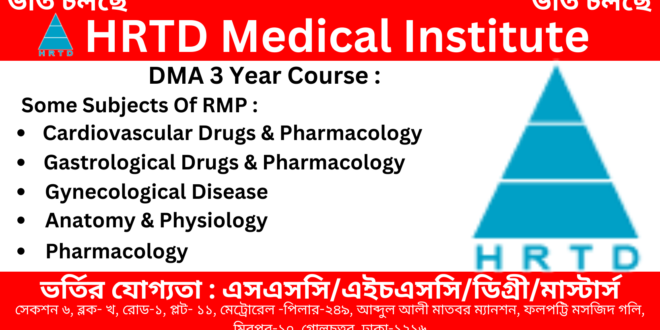
Diploma Medical Assistant | DMA COURSE | 3 Year Details
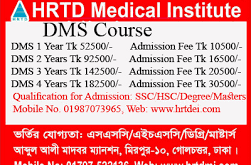
DMA Course 3 Years. Mobile No. 01987-073965, 01797-522136. DMA Course 3 Years Tk 142500/-, DMA means Diploma Medical Assistant. Admission Fee Tk 20500/-, Monthly Fee Tk 3000/Month. 24 Subjects in 6 Semesters. The Subjects are Human Anatomy and Physiology, Pharmacology, Microbiology, Hematology, Pathology, Practice of Medicine, Medical Diagnosis, Histology and Cytology, etc. Diploma Medical Course is available at HRTD Medical Institute. We provide the best teaching, the best environment, and the best education and training for our students with the help of Models, Monitors, and some other medical devices. Our students never remain unemployed.
- Course Summary :
- Total Subjects : 24
- Total Exam Marks : 2400
- Total Semester: 6
1’st Semester :
- Anatomy & Physiology…………………….….……Marks-100
- Gen. chemistry & Pharmacology………………Marks-100
- First Aid & Practice Of Medicine-1……………Marks-100
- Study of OTC ……………………………………….……Marks-100
- Hematology & Pathology……………………………Marks-100
2’nd Semester :
- Orthopedic Medicine…………………………..…..…Marks-100
- Biochemistry…………………….………..…………………..Marks-100
- Medical Diagnosis……………………..………………..Marks-100
- Cardiovascular Anatomy & Physiology………..Marks-100
- Surgery & Antimicrobial drugs………………………Mark-100
3’rd Semester :
- Orthopedic Anatomy & Physiology…….…..Marks-100
- Practice of Medicine 2 &3…………………………………Marks-100
- Microbiology & Pathology…………..……….….Marks-100
- Practice Of Neuro medicine………………….…..Marks-100
4’th Semester :
- Human Anatomy & Physiology-2………………………….Marks-100
- Neuro Anatomy & Physiology……………………………………………Marks-100
- Histology & Cytology…………………………………………..Marks-100
- Hepatology……………………………………..…………Marks-100
5’th Semester :
- Pharmacology-2……………………………..…………Marks-100
- Practice of Medicine-2…………………..………….Marks-100
- Surgery-1……………………………………………………Marks-100
- General Pathology………….…….…Marks-100
6’th Semester :
- Cardiovascular Drugs & Pharmacology….…Marks-100
- Gastrological Drugs & Pharmacology……….Marks-100
- Essential Drugs & Pharmacology………….…..Marks-100
- Gynecological Disease…………………………..……Marks-100
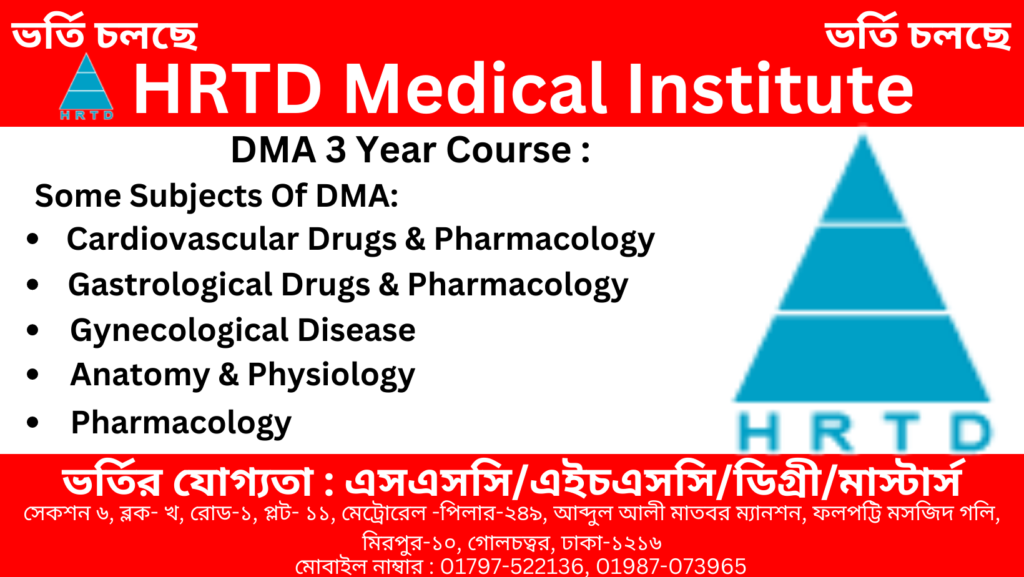
DMA Course In Bangladesh Diploma Medical Assistant | DMA COURSE | 3 Year
DMA Course In Mirpur Diploma Medical Assistant | DMA COURSE | 3 Year
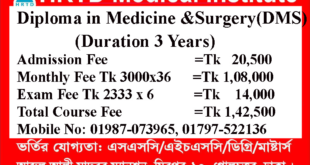
- Cost Summary :
- Total Course Fee : 142,500 /-
- Admission Fee :20,500 /-
- Monthly Fee : ( 36 × 3000 )
- Exam Fee : (6) 14,000 /- In Total.
Practical Classes Diploma Medical Assistant | DMA COURSE | 3 Year
Auscultation, Heart Beat, Heart Rate, Heart Sound, Pulse, Blood Pressure, Respiratory Rate, Inhaler, Rota Haler, Nebulizer, Blood Oxygen, Blood grouping, Cyanosis, Blood Glucose (Diabetes), Body Temperature, Dehydration Test, Edema Test, IM Injection, IV Injection, Saline Infusion, Cleaning, Dressing, Bandaging.
Class Time for Diploma Medical Assistant | DMA COURSE | 3 Year
Weekly Class 3 hours. There are two class systems. System for Job holders and System for Regular Students. For Regular Students Friday 1 hour, Saturday 1 hour, and Monday 1 hour. For Job holders, Friday is 3 hours, or Monday is 3 hours. Morning Shift 9:00 am to 12:00 pm, and Evening Shift 3:00 pm to 6:00 pm.
Anatomy and Physiology for Diploma Medical Assistant | DMA COURSE | 3 Year
Diploma Medical Assistant | DMA COURSE | 3 Year. Anatomy and Physiology is an important subject for medical science. The study of Body Structure and its functions is Anatomy and Physiology. Here we discuss the systems of the Human Body and its Organs, Tissues, and Cells. The systems of the Human Body are the Nervous System, Digestive System, Respiratory System, Circulatory System or Cardiovascular System, Skeletal System, Muscular System, Endocrine System, Immune System, Lymphatic System, Integumentary System or Covering System, and Urinary System.
Anatomy and Physiology (A&P) is a core biology subject studying the body’s structures (Anatomy) and how they function (Physiology), exploring everything from cells to organ systems like cardiovascular, nervous, and digestive, with a key focus on maintaining homeostasis (stable internal conditions) for health and disease understanding. It’s crucial for healthcare, medicine, and life sciences, explaining what the body is and how it works.
Key Concepts for Diploma Medical Assistant | DMA COURSE | 3 Year
- Anatomy: The study of body parts, their shapes, and relationships (e.g., the heart has four chambers).
- Physiology: The study of how those parts work (e.g., the heart pumps blood).
- Homeostasis: The body’s ability to maintain stable internal conditions (temperature, pH, etc.).
Major Topics Covered
- Levels of Organization: From chemical to cellular, tissue, organ, system, and organism.
- Body Systems: Integumentary (skin), Skeletal, Muscular, Nervous, Endocrine, Cardiovascular, Lymphatic/Immune, Respiratory, Digestive, Urinary, Reproductive.
- Cellular Processes: Respiration, ATP production, cell signaling.
- Feedback Mechanisms: Especially negative feedback loops for homeostasis.
Why It Matters
- Foundation for Health: Explains normal function, disease development, and treatments.
- Career Essential: Required for nursing, medicine, physical therapy, and biomedical fields.
In essence, A&P shows the intricate link between structure and function, revealing the complex, coordinated processes that keep us alive.
Pharmacology for Diploma Medical Assistant | DMA COURSE | 3 Year
The study of Drugs and Medicine is called Pharmacology. Drugs are chemicals that can react with cells, tissues, and organs of the body. Here we discuss group-wise drugs and their medicines. Common Groups of Drugs are Pain Killer Drugs, Anti Ulcer Drugs, Anti Vomiting Drugs, Anti Viral Drugs, Laxative Drugs, Motility Drugs and Antimotility Drugs, Bronchodilator Drugs, Antibiotic Drugs, Anti Fungal Drugs, Anti Thrombotic Drugs, Anti Protozoal Drugs, Anthelmintic Drugs, Anti Hypertensive Drugs, Beta Blocker Drugs, Calcium Channel Blocker Drugs, ACE Inhibitor Drugs, Hemostatic Drugs, Analgesic Drugs, Antipyretic Drugs, Steroid Drugs, NSAID Drugs, CNS Drugs, Neuropathic Pain Keller Drugs, Spasmodic Drugs, etc.
Pharmacology is the scientific study of drugs and their effects on living systems, covering how substances interact with the body (pharmacodynamics) and how the body processes them (pharmacokinetics: absorption, distribution, metabolism, excretion). It’s a research-focused field combining biology, chemistry, and medicine, aiming to discover new drugs, understand disease mechanisms, and develop treatments, distinct from pharmacy, which focuses on dispensing medications.
Key Areas of Study of Diploma Medical Assistant | DMA COURSE | 3 Year
- Pharmacokinetics (PK): What the body does to the drug (ADME).
- Pharmacodynamics (PD): What the drug does to the body (mechanisms of action).
- Toxicology: The study of harmful effects of chemicals.
- Drug Discovery & Development: From molecular design to clinical trials.
Core Components for Diploma Medical Assistant | DMA COURSE | 3 Year
- Molecular/Cellular Level: How drugs affect genes, cells, and tissues.
- Systems Level: How drugs impact organs and systems (e.g., nervous, cardiovascular).
- Therapeutic Use: How drugs treat diseases (e.g., infections, cancer, pain).
Career & Study Path for Diploma Medical Assistant | DMA COURSE | 3 Year
- Focus: Research, innovation, and understanding drug action.
- Related Fields: Biochemistry, molecular biology, medicine, toxicology, biotechnology, medicinal chemistry.
- Career Paths: Pharmaceutical research, biotech industry, healthcare, further studies (MSc, PhD, Medicine).
What it’s NOT (vs. Pharmacy)
- Pharmacology: Research-focused, discovering & understanding drugs.
- Pharmacy: Practice-focused, dispensing & managing drug therapy for patients (MPharm degrees often integrate this
First Aid for Diploma Medical Assistant | DMA COURSE | 3 Year
First Aid is an important subject for all courses. It is very important for the RMP Course. Here we discuss Shock, Classifications of Shock, Causes of Shock, Stages of Shock, Clinical Features of Shock, Hypovolemic Shock, Cardiogenic Shock, Neurogenic Shock, Traumatic Shock, Burn Shock, Electric Shock, Psychogenic Shock, Anaphylactic Shock, First Aid of Shock, Management of Shock, First Aid of Cut, First of Snake Bite, First Aid of Accidental Injury, etc.
Study of OTC Drugs for Diploma Medical Assistant | DMA COURSE | 3 Year
OTC is the short form of over-the-counter. That is OTC Drugs are over-the-counter drugs. The study of OTC Drugs is important for RMP Courses. These Drugs can be sold or purchased without any prescription from Registered MBBS Doctors. These Drugs are Emergency and Safe for the patients. The study of OTC Drugs improves the quality of practice. Some OTC Drugs are Paracetamol, Albendazole, Ascorbic Acid, Calcium, Multivitamins, Vitamin B Complex, Omeprazole, Oral Rehydration Salt, Salbutamol, Mebendazole, Neomycin, Gentamycin, Bacitracin, etc.
Hematology and Pathology for Diploma Medical Assistant | DMA COURSE | 3 Year
Hematology and Pathology are important Subjects for Medical Science. The study of Blood is called Hematology and the Study of Pathos is called Pathology. In Hematology and Pathology, we discuss blood cells, their morphology and functions, Blood Diseases, Common Pathos and their pathogenesis, Atrophy, Hypertrophy, Metaplasia, Gangrene, Pathological Tests like TC, DC, ESR, Hemoglobin Percentage, etc.
Microbiology and Antimicrobial Drugs for Diploma Medical Assistant | DMA COURSE | 3 Year
The Study of Microorganisms is called Microbiology. Microorganisms are the smallest living beings that cannot be seen without a microscope. The Drugs that are used for the treatment of Infectious Diseases are Antimicrobial Drugs. Microorganisms are Bacteria, Protozoa, Fungus, and Virus. Antimicrobial Drugs are Antibiotic Drugs ( Antibacterial Drugs), Anti Protozoal Drugs, Anti Fungal Drugs, and Anti Viral Drugs.
Practice of Medicine for Diploma Medical Assistant | DMA COURSE | 3 Year
The study of Disease and Treatment is called the Practice of Medicine. Actually, the Practice of Medicine means the use of medicine for treatments. This subject is important for a Rural Medical Practitioner. This subject discusses some common diseases. The points of discussion for the Practice of Medicine are the Definition of Disease, Causes of Disease, Clinical Features of Disease ( Symptoms and Signs), Investigation of Disease, Treatment of Disease, Complication of Disease, and Advice for the Patients.
Common Cardiovascular Problems for Diploma Medical Assistant | DMA COURSE | 3 Year
Common Cardiovascular Problems are an important issue nowadays. Common Cardiovascular Problems are Hypertension, Hypotension, Postural Hypotension, Tachycardia, Bradycardia, Abnormal Pulse, Heart Burn, Deficiency of Saturated Oxygen, Abnormal Heart Sound, Increase Bad Cholesterol, Heart Failure, Edema, etc. These problems are discussed as elaborately as possible. Bad Cholesterol are LDL, VLDL and TG.
Common Pediatric Problems for Diploma Medical Assistant | DMA COURSE | 3 Year
Diploma Medical Assistant | DMA COURSE | 3 Year. Common Pediatric Problems: Pediatric Respiratory Problems, Pediatric Digestive Problems, Pediatric Skin Problems. These are discussed in the Rural Medical Practitioner Course. Pediatric Respiratory Problems are Pediatric Pneumonia, Pediatric Nasal Congestion, Pediatric Asthma, etc. Pediatric Digestive Problems are Rotavial Diarrhea, Pediatric Flatulence, Pediatric Abdominal Discomfort, Pediatric Vomiting, and Pediatric Constipation. Pediatric Skin Problems are Tineasis and Oral Candidiasis, especially Tinea Capitis, and Tinea Crusis. Tinea is a fungus that causes Tiniasis. So, Tineasis is a fungal infectious disease. Candida is also a fungus and can cause oral candidiasis.
Gastrology for Diploma Medical Assistant | DMA COURSE | 3 Year
Diploma Medical Assistant | DMA COURSE | 3 Year. The study of the Gastro ( Stomach) in Medical Science is called Gastrology. Gastrology for RMP is an important subject. This Subject discusses the important part of Gastrointestinal Anatomy, Gastrointestinal Drugs, and Medicines, and Gastrointestinal Disease as elaborately as possible.
Common Points of Gastrointestinal Anatomy and Physiology are Anatomy of Tongue, Anatomy or Oral Cavity, Anatomy of the Esophagus, Physiology of Tongue, Physiology of Evola, Physiology of Epiglotis, Anatomy of Stomach, Anatomy of Small Intestine, Anatomy of Large Intestine, Anatomy of Cecum and Appendix, Physiology of Appendix, Digestive Sphincters, etc. Common Gastrointestinal Drugs are Anti Vomiting Drugs, Anti Ulcer Drugs, Motility Drugs, Antimotility Drugs, Laxative Drugs, Anti Diarrheal Drugs, Some Antimicrobial Drugs for Gastrointestinal Infectious Diseases. There are 6 Sphincters in the human digestive system.
Common Gastrointestinal Problems and Diseases are Vomiting, Nausea, Abdominal Discomfort, Hyperacidity, Gastric Ulcer, Duodenal Ulcer, GERD, Diarrhea, Dysentery, Amebic Dysentery, Bacillary Dysentery, Cholera, Constipation, etc.
General Pathology for Diploma Medical Assistant | DMA COURSE | 3 Year
Diploma Medical Assistant | DMA COURSE | 3 Year. General Pathology studies the fundamental mechanisms of disease, focusing on how cells, tissues, and organs respond to injury, leading to structural and functional changes, and involves diagnosing illnesses through lab tests like biopsies, blood analysis, and advanced imaging to understand the “why” and “how” of disease for patient care. It covers basic cellular responses (inflammation, adaptation, repair) and broad disease processes (infections, cancers) before branching into specific areas like surgical or molecular pathology, acting as a bridge between basic science and clinical medicine.
Core Concepts
- Cellular Injury & Adaptation: How cells cope with stress (e.g., hypertrophy, atrophy, metaplasia) or die (necrosis).
- Inflammation & Repair: The body’s response to damage, including blood vessel changes (hyperemia) and wound healing.
- Disorders of Growth: Neoplasia (cancer) and other abnormal cell proliferation (hyperplasia).
- Biochemical Disturbances: Fatty changes (steatosis) or glycogen accumulation in tissues.
- Infectious Diseases: How pathogens like viruses (HPV causing warts) or parasites (tapeworms causing cysticercosis) cause illness.
Key Areas & Tools
- Sub-disciplines: Anatomical Pathology (tissues, biopsies), Clinical Pathology (blood, fluids), Surgical Pathology, Forensic Pathology, Molecular Pathology, etc.
- Diagnostic Techniques: Microscopy (light, electron), biopsies, blood tests, PCR, sequencing, special stains.
Role of a Pathologist
- Diagnosis: Using lab findings to identify diseases.
- Consultation: Advising other doctors on treatment.
- Broad Scope: Managing a diverse range of cases, from common infections to complex cancers.
In essence, general pathology provides the foundational knowledge of disease processes that all other medical specialties rely on to understand and treat patients effectively.
General chemistry for Diploma Medical Assistant | DMA COURSE | 3 Year
General chemistry is an introductory course that covers fundamental principles of matter and its properties, including atomic structure, chemical bonding, reactions, stoichiometry, and the properties of gases, liquids, and solids. It provides a broad foundation for understanding how elements combine to form compounds and how these compounds interact.
Key topics in general chemistry for Diploma Medical Assistant | DMA COURSE | 3 Year
This video explains the basic principles of matter and its phases:
- Matter and its properties: This includes the definition of matter, its physical states (solid, liquid, and gas), and how to measure its properties.
- Atomic structure: Students learn about the components of an atom (protons, neutrons, electrons) and how the number of protons defines an element.
- Chemical bonding: This covers how atoms combine to form molecules and compounds, and the different types of bonds that hold them together.
- Chemical reactions and stoichiometry: This area focuses on how to represent and balance chemical reactions, calculate the amounts of reactants and products, and identify limiting reactants.
- Gases: The behavior of gases is explained through gas laws, which relate pressure, volume, temperature, and the amount of gas.
- Aqueous solutions: This includes the study of solutions where a substance is dissolved in water, the properties of acids and bases, and different types of reactions that occur in water, such as precipitation reactions.
- Energy and kinetics: Topics include thermochemistry (the study of heat in chemical reactions) and chemical kinetics (the study of reaction rates).
- Equilibrium: This concept explains that chemical reactions can reach a state where the forward and reverse reactions occur at the same rate.
You can watch this video to learn more about the components of atoms and the laws of chemical combination:
Orthopedic Medicine for Diploma Medical Assistant | DMA COURSE | 3 Year
Diploma Medical Assistant | DMA COURSE | 3 Year. Orthopedic medicine focuses on the musculoskeletal system—bones, joints, ligaments, tendons, muscles, and nerves—diagnosing, treating (surgically and non-surgically), preventing, and rehabilitating conditions from birth defects, injuries (like fractures, sports injuries), and degenerative diseases (like arthritis) to improve mobility and quality of life, often involving a team with surgeons, physiatrists, and therapists.
What it covers
- Musculoskeletal System: Bones, joints, ligaments, tendons, muscles, and nerves.
- Conditions: Fractures, arthritis, back pain, sports injuries, scoliosis, bone tumors, infections, nerve damage, developmental issues (like hip dysplasia).
Who treats it (The Orthopedic Team)
- Orthopedic Surgeons: Specialists in surgery and non-surgical treatments for musculoskeletal disorders.
- Physiatrists (Physical Medicine & Rehabilitation Doctors): Focus on restoring function, can provide injections but generally avoid surgery.
- Physical Therapists & Occupational Therapists: Help with rehabilitation and regaining movement.
- Athletic Trainers: Assist with sports-related injuries and prevention.
Treatment Approaches for Diploma Medical Assistant | DMA COURSE | 3 Year
- Non-Surgical: Medications (NSAIDs), injections (like hyaluronic acid), physical therapy, bracing, lifestyle changes.
- Surgical: Procedures to repair injuries or correct deformities (e.g., joint replacement, arthroscopy).
Specializations
- Sports Medicine: Focuses on active individuals and athletic injuries, optimizing performance and recovery.
- Subspecialties: Doctors may focus on specific areas like hands, feet, spine, hip, or knee.
Biochemistry for Diploma Medical Assistant | DMA COURSE | 3 Year
Diploma Medical Assistant | DMA COURSE | 3 Year. Biochemistry is the study of chemical processes within living organisms, bridging biology and chemistry to understand life at a molecular level, focusing on molecules like proteins, DNA, sugars, and lipids, and how they function, interact, and create biological functions, from photosynthesis to disease. It involves areas like metabolism, structural biology, enzymology, and molecular genetics, with applications in medicine, nutrition, forensics, and developing new technologies.
Core Concepts for Diploma Medical Assistant | DMA COURSE | 3 Year
- Biomolecules: Proteins (enzymes, structure), Nucleic Acids (DNA/RNA), Carbohydrates (energy, structure), Lipids (membranes, signaling).
- Metabolism: How organisms get energy, convert nutrients, and build/break down molecules (e.g., cellular respiration, photosynthesis).
- Molecular Mechanisms: Understanding the chemical basis of heredity, cell signaling, and disease processes.
Key Fields & Applications for Diploma Medical Assistant | DMA COURSE | 3 Year
- Structural Biology: Determining 3D shapes of biomolecules.
- Enzymology: Studying enzyme function and catalysis.
- Molecular Biology & Genetics: How genes work and are expressed.
- Medicine: Drug development, disease diagnosis (biochemical tests), and understanding pathology.
- Food Science & Nutrition: Understanding food chemistry and nutritional needs.
- Synthetic Biology: Designing new biological systems.
Why It’s Important for Diploma Medical Assistant | DMA COURSE | 3 Year
Biochemistry explains the fundamental processes that sustain life, allowing scientists to understand, manipulate, and improve biological systems, leading to advancements in health, agriculture, and technology.
Teachers for Diploma Medical Assistant | DMA COURSE | 3 Year
- Dr. Sakulur Rahman, MBBS, CCD
- Dr. Suhana, MBBS, PGT
- Dr. Amena Afroze Anu, MBBS, PGT
- Dr. Lamia, MBBS
- Dr. Mahinul Islam, MBBS
- Dr. Sharmin Ankhi, MBBS, PGT
- Dr. Jannatul Aman, MBBS, PGT
- Dr. Turzo, MBBS, FCPS (Part 2)
- Dr. Benzir, MBBS, FCPS (Part 2)
- Dr. Disha, MBBS, FCPS (Part 2)
- Dr. Tisha, MBBS, PGT Medicine
Job Opportunities for DMA Course in Bangladesh
Job Opportunities. HRTD Medical Institute Mobile Number-01987073965.

One comment
Pingback: Best DMA Courses in Bangladesh. Mobile No. 01987-073965, 01797-522136.