 MATCDHAKA – Medical Assistant Training Centre in Dhaka Pharmacy, Veterinary, Dental, Nursing, Pathology, Physiotherapy and Homeopathy Training Institute in Dhaka



Pharmacy Course 1Year Details
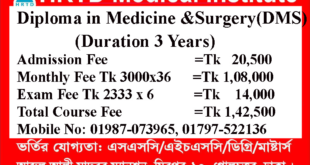
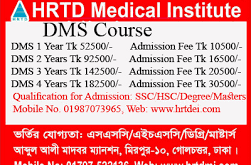
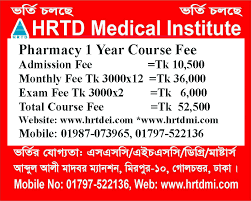
Pharmacy course 1Year: Mobile Phone Number 01797-522136, 01987-073965. Pharmacy 1 Year is a Short Course of HRTD Medical Institute. Total Subjects 10 in one year. Total Course Fee Tk 52500/-, including Admission Fee Tk 10500/-, Monthly Fee Tk 3000/-, and Exam Fee Tk 6000/-. Total Exam Marks 1000.
Pharmacy Course 1Year Subject
1st semester subject of Pharmacy Course 1Year
1.Anatomy and Physiology-100
2.Pharmacology-100
3.Study of OTC medicine-100
4.First Aid and Antimicrobial Drug-100
5.Pharmacology-2-100
2nd semester Subject of Pharmacy Course 1Year
1.Cardiovascular Drug-100
2.Essential Drug-100
3.ENT Drug-100
4.Ophthalmic drug and Pharmacology-100
5.Practice of Ophthalmic drug-100
Pharmacy Course 1Year for weekly class time
1.Weekly class 3 hours
2.For job holder 3 hours in a day. Friday, Saturday and Monday. Friday morning shift 9 am to 12 pm a nd Evening shift 3pm to 6pm. Saturday morning shift 10am to 1pm and Evening shift 3pm to 6pm, Monday morning shift 9am to 12pm and Evening shift 3pm to 6pm.
3.For Regular students 1 hour for Friday, 1 hour on Saturday, 1Hour on Monday.
Location For Pharmacy Course 1Year in Bangladesh
Location For Pharmacy Course 1Year. Mobile Number-01987073965 HRTD Medical Institute, Abdul Ali Madbor Mansion, Section-6, Block-kha, Road-1, Plot-11, Metro Rail Pillar No-249, Mirpur-10 (Gol chattar), Dhaka-1216
Qualification for Admission to Pharmacy Course 1Year
Pharmacy Course 1Year for Qualification of SSC/HSC/Bachelor Degree/Master Degree. The minimum qualification is an ssc pass from any Science, Arts, Commerce background.,
Cost Summary for Pharmacy Course 1Year
Pharmacy Course 1Year
- Total cost =52500 tk
- Admission fee=10500 tk
- Monthly fee=3000×12=36000 tk
- Exam fee =2×3000=6000 tk
Teacher for Pharmacy Course 1Year
- Dr. Sakulur Rahman, MBBS
- Dr. Suhana, MBBS
- Dr. Mahinul Islam, MBBS
- Dr. Disha, MBBS, FCPS
- Dr. Tisha, MBBS
- Dr. Shamima, MBBS
- Dr. Rajoan Rana, MBBS
- Dr. Neamul Islam, MBBS
Practical for Pharmacy Course 1Year
Auscultation, Heart Beat, Heart Rate, Heart Sound, Pulse, Blood Pressure, Respiratory Rate, Inhaler, Rota Haler, Nebulizer, Blood Oxygen, Cyanosis, Blood Glucose (Diabetes), Body Temperature, Dehydration Test, Edema Test, IM Injection, IV Injection, Saline Infusion, Cleaning, Dressing, Bandaging, Blood Grouping, Nasal tube, Gel, Hand wash, First Aid
Anatomy and Physiology for Pharmacy Course 1Year
Anatomy and Physiology is an important subject for the pharmacy course. Here we discuss the systems of the human body and its organs, Tissues and cells. The systems of the human body are Nervous system, Respiratory system, Endocrine,
Anatomy and physiology (A&P) are the foundational sciences of the body: Anatomy studies the body’s structures and their physical relationships (the “what & where”), while Physiology studies how those structures function (the “how & why”). Together, they explain life, from atoms to organ systems, focusing on how the body maintains balance (homeostasis) through interconnected systems like cardiovascular, nervous, and respiratory. A key principle is the complementarity of structure and function: form dictates function, meaning the shape of a part enables its job, like heart chambers pumping blood.

Anatomy: The Study of Structure
- Definition: The study of internal and external body structures and their relationships.
- Levels: From atoms and molecules to cells, tissues (muscle, nerve), organs (heart, liver), and organ systems (digestive, skeletal).
- Key Concepts:
- Anatomical Position: A standard upright posture used as a reference.
- Planes: Imaginary lines (sagittal, coronal, transverse) dividing the body.
- Directional Terms: Words like superior, inferior, anterior, posterior to locate parts.
Physiology: The Study of Function
- Definition: The study of how the body’s parts work and support life.
- Focus: The chemical and physical processes, like cell respiration, nerve signals, and blood pumping.
- Key Concepts:
- Homeostasis: Maintaining a stable internal environment (temperature, water, nutrients).
- Systems: How systems (respiratory, digestive) interact to maintain life.
Why They’re Studied Together
- A&P are inseparable: You can’t understand how the heart pumps (physiology) without knowing its four chambers (anatomy).
- Essential for healthcare: Doctors, nurses, and scientists use A&P to understand health, diagnose diseases, and develop treatments.
Pharmacology for Pharmacy Course 1Year
The study of Drugs and Medicine is called Pharmacology. Drugs are chemicals that can react with cells, tissues, and body organs. Common Groups of Drugs are Pain Killer Drugs, Anti Ulcer Drugs, Anti Vomiting Drugs, Anti Viral Drugs, Laxative Drugs, Motility Drugs and Antimotility Drugs, Bronchodilator Drugs, Antibiotic Drugs, Anti Fungal Drugs, Anti Thrombotic Drugs, Anti Protozoal Drugs, Anthelmintic Drugs, Anti Hypertensive Drugs, Beta Blocker Drugs, Calcium Channel Blocker Drugs, ACE Inhibitor Drugs, Analgesic Drugs, Antipyretic Drugs, Steroid Drugs, NSAID Drugs, CNS Drugs, Neuropathic Pain Keller Drugs, Spasmodic Drugs, etc.
Pharmacology is the scientific study of drugs and chemicals, exploring how they interact with living systems, their effects on the body (therapeutic and toxic), their mechanisms, and how organisms process them, bridging basic sciences like biology and chemistry with medicine to develop and use medicines safely and effectively. It covers drug discovery, development, actions, uses (like preventing, diagnosing, treating disease), and toxicity, forming the basis for treatment in various medical fields.
Core Aspects
- Pharmacokinetics (PK): What the body does to the drug (Absorption, Distribution, Metabolism, Excretion – ADME).
- Pharmacodynamics (PD): What the drug does to the body (mechanisms, effects, interactions at molecular/cellular levels).
- Toxicology: The study of harmful effects of chemicals and drugs.
Key Areas of Study
- Drug Action: How drugs work at molecular and cellular levels.
- Drug Development: Discovery, design, and testing of new therapies.
- Therapeutic Use: Using drugs to treat or prevent illness.
- Biological Processes: Using drugs as tools to understand biology.
Sub-disciplines
- Clinical Pharmacology: Drug study in humans, advancing treatments.
- Cardiovascular Pharmacology: Drugs affecting the heart and vessels.
- Neuropharmacology: Drugs affecting the nervous system.
- Pharmacogenetics/Genomics: Genetic variations in drug response.
Importance
Pharmacology provides the scientific foundation for medicine, ensuring drugs are developed, regulated, and used effectively to improve health while minimizing harm, crucial for fields from oncology to neuroscience
Study Of OTC Medicine for Pharmacy Course 1Year
OTC is the short form of over-the-counter. That is OTC Drugs are over-the-counter drugs. The study of OTC Drugs is important for RMP Courses. These Drugs can be sold or purchased without any prescription from Registered MBBS Doctors. These Drugs are Emergency and Safe for the patients. The study of OTC Drugs improves the quality of practice. Some OTC Drugs are Paracetamol, Albendazole, Ascorbic Acid, Calcium, Multivitamins, Vitamin B Complex, Omeprazole, Oral Rehydration Salt, Salbutamol, Mebendazole, Neomycin, Gentamycin, Bacitracin, etc.
Studying Over-the-Counter (OTC) medications involves looking at their widespread use (self-medication), common types (painkillers, cold meds, antacids), sources (pharmacies), reasons for use (convenience), and associated risks (antibiotic misuse, adverse effects). Research focuses on public knowledge, attitudes, practices, and identifying needs for better regulation, education, and safer access to OTC drugs, especially in regions like Bangladesh where misuse is high.
Key Areas of OTC Study:
- Prevalence & Patterns: How often people use OTCs, common drugs (NSAIDs, antacids, cold meds), and demographics involved.
- Motivations: Why people choose OTCs (accessibility, cost, perceived minor illness).
- Risks & Misuse: Overuse of antibiotics, self-treating chronic conditions, potential interactions and side effects.
- Knowledge & Attitudes: Public awareness, beliefs, and understanding of safe usage.
- Interventions: Effectiveness of education, regulatory control, and pharmacist roles in promoting safe self-care.
Why it’s Important:
- Public Health: High self-medication, especially with antibiotics, can lead to resistance.
- Patient Safety: Prevents adverse drug reactions and interactions.
- Healthcare Systems: Understanding OTC use helps manage demand and improve healthcare delivery.
Examples of Studies:
- Studies in Dhaka found high self-medication, with NSAIDs and antibiotics being common, highlighting risks.
- Research explores medical/pharmacy student knowledge versus general population practices.
- Surveys assess awareness and behaviors among specific communities.
First Aid 1 & 2 for Pharmacy Course 1Year
First Aid is an important subject for all courses and Pharmacy Course 1Year. It is very important for the DMA Course. Here we discuss Shock, Classifications of Shock, Causes of Shock, Stages of Shock, Clinical Features of Shock, Hypovolemic Shock, Cardiogenic Shock, Neurogenic Shock, Traumatic Shock, Burn Shock, Electric Shock, Psychogenic Shock, Anaphylactic Shock, First Aid of Shock, Management of Shock, First Aid of Cut, First of Snake Bite, First Aid of Accidental Injury etc.
First Aid Levels 1 & 2 refer to progressive training stages, with Level 1 (Basic) covering fundamental life-saving skills (like CPR, bleeding control) for everyday emergencies, while Level 2 (Intermediate) builds on this with more advanced care for environmental issues (heatstroke, frostbite), specific conditions (asthma, seizures, diabetes), and systematic emergency protocols, preparing responders for more complex workplace or public situations. Level 2 training typically requires completing Level 1 first and involves more extensive, multi-day courses.
First Aid Level 1 (Basic)
- Focus: Immediate, essential life support and basic injury care.
- Skills: CPR, managing bleeding, bandaging, treating minor wounds, responding to choking.
- Goal: Preserve life, prevent further injury, promote recovery in simple scenarios.
First Aid Level 2 (Intermediate)
- Focus: More advanced emergency care and systematic response for complex situations.
- Skills: Treating heat exhaustion, frostbite, hypothermia, asthma attacks, seizures, strokes, diabetes emergencies, and soft tissue injuries.
- Goal: Provide skilled care until professionals arrive, often mandated for workplaces, and serves as a prerequisite for higher levels.
Key Differences
- Depth: Level 2 offers deeper knowledge and more advanced interventions than Level 1.
- Duration: Level 2 courses are significantly longer (e.g., 36 hours).
- Application: Level 1 is foundational; Level 2 prepares for more critical, varied emergencies, ideal for designated workplace first aider
Antimicrobial drugs for Pharmacy Course 1Year
The Study of Microorganisms is called Microbiology. Microorganisms are the smallest living beings that cannot be seen without a microscope. The Drugs that are used for the treatment of Infectious Diseases are Antimicrobial Drugs. Microorganisms are Bacteria, Protozoa, Fungus, and Virus. Antimicrobial Drugs are Antibiotic Drugs ( Antibacterial Drugs), Anti Protozoal Drugs, Anti Fungal Drugs, and Anti Viral Drugs.
Antimicrobial drugs are medicines used to treat and prevent infectious diseases caused by microbes like bacteria, viruses, fungi, and parasites. These drugs include antibiotics, antivirals, antifungals, and antiparasitics, and work by killing microbes or inhibiting their growth without harming the host’s cells (selective toxicity). They are used in human, animal, and plant medicine to manage infections and can be administered orally, intravenously, or topically.
Types of antimicrobial drugs
- Antibiotics: Target bacterial infections by killing bacteria (bactericidal) or stopping their multiplication (bacteriostatic).
- Antivirals: Eliminate viruses or inhibit their life cycle.
- Antifungals: Kill or inhibit the growth of fungi, including yeasts.
- Antiparasitics: Treat infections caused by parasites like nematodes, cestodes, and protozoa.
Key characteristics
- Selective toxicity: The ability to kill or inhibit microbes without causing serious damage to the host’s cells.
- Spectrum of activity:
- Broad-spectrum: Effective against a wide range of bacteria.
- Narrow-spectrum: Effective against a specific type of organism.
- Mechanisms of action: Drugs may kill bacteria by stopping them from building cell walls, while others stop their reproduction.
Important considerations
- Antimicrobial resistance: A major global health threat that occurs when microorganisms evolve and become unresponsive to antimicrobial drugs.
- Proper use: Antimicrobial drugs should be used only when prescribed by a physician, veterinarian, or agricultural expert to manage infections.
- Delivery methods: They can be administered in various ways, including orally (by mouth), parenterally (intravenously or intramuscularly), or topically (as a cream or ointment)
Pharmacology-2 for Pharmacy Course 1Year
Pharmacology-2 is typically the second part of a university -level pharmacology course. Pharmacology-2 main topics include the autonomic nervous system, Cardiovascular system drugs, Central nervous system drugs, Anti infective agents and endocrine drugs.
Pharmacology-2 (or Pharmacology II) is typically a continuation course in medical/pharmacy education, focusing on drugs acting on specific body systems (like CNS, CVS, GIT, Respiratory, Hormonal) and anti-infectives, building on basic principles from Pharmacology I, and delving deeper into drug classifications, mechanisms (pharmacodynamics), body’s effects (pharmacokinetics), uses, adverse effects, and clinical applications for rational prescribing in various disease states.
Core Concepts Covered
- Organ System-Specific Drugs: Detailed study of drugs affecting the Autonomic Nervous System, Central Nervous System (CNS), Respiratory System, Gastrointestinal (GIT) tract, Cardiovascular System (CVS), Immune System, and Hormones (Endocrine).
- Anti-infectives: Pharmacology of antimicrobials, antifungals, antivirals, antiparasitics, and chemotherapeutic agents (like sulfonamides, quinolones, tetracyclines, macrolides).
- Pharmacokinetics & Pharmacodynamics: Advanced understanding of how drugs work (effects on body) and how the body processes them (absorption, distribution, metabolism, excretion).
- Clinical Aspects: Adverse Drug Reactions (ADRs), drug interactions, dosage, routes, contraindications, and rational drug selection.
- Special Topics: Toxicology, vitamins, essential minerals, and drugs in emergency/reproductive health.
Typical Structure & Goals
- Continuation: Builds on foundational knowledge from Pharmacology I.
- Systematic Study: Organizes drugs by the system they affect or their therapeutic class.
- Rational Prescribing: Emphasizes safe, effective, and economical use of medicines.
In essence, Pharmacology-2 moves from general principles to specific drug classes and their detailed application in treating common and complex medical conditions.
Cardiovascular Drugs for Pharmacy Course 1Year
Cardiovascular drugs are medications used to manage conditions affecting the heart and blood vessels, such as high blood pressure, high cholesterol, arrhythmias, and blood clots. They work through different mechanisms, including ACE inhibitors, beta-blockers, diuretics, and statins. Examples of specific drugs include lisinopril, atorvastatin, amlodipine, and aspirin.
Classes and examples of cardiovascular drugs of Pharmacy Course 1Year
- ACE inhibitors: Block the production of angiotensin II, which helps relax blood vessels. Examples include lisinopril and enalapril.
- Beta-blockers: Block the effects of adrenaline, which slows the heart rate and lowers blood pressure. Examples include metoprolol and atenolol.
- Calcium channel blockers: Relax blood vessels and decrease the heart’s pumping strength. Examples include amlodipine and verapamil.
- Diuretics (water pills): Help the body get rid of excess salt and water, which can lower blood pressure. Examples include furosemide and chlorothiazide.
- Cholesterol-lowering medicines: Reduce LDL (“bad”) cholesterol levels, which can lead to plaque buildup in the arteries.
- Statins: Examples include atorvastatin and simvastatin.
- Anticoagulants and antiplatelet medicines: Prevent blood clots from forming or growing.
- Anticoagulants: Examples include warfarin, rivaroxaban, and apixaban.
- Antiplatelet agents: Example include clopidogrel and aspirin.
- Cardiac glycosides: Improve the heart’s pumping ability and help control irregular heartbeats. An example is digoxin.
Essential Drug for Pharmacy Course 1Year
The “Essential Drug subject” refers to the concept and study of essential medicines: pharmaceuticals selected by the World Health Organization (WHO) and national health authorities that satisfy the priority health care needs of a population.
These medicines are chosen based on the following criteria:
- Public health relevance: The prevalence of specific diseases within a country or region.
- Evidence of efficacy and safety: Only drugs with sound data from clinical studies are considered.
- Comparative cost-effectiveness: The total cost of treatment is a major consideration, comparing different options within the same therapeutic category.
- Assured quality and availability: They must be available in appropriate dosage forms, of assured quality, and at prices individuals and health systems can afford.
Key Aspects of the “Essential Drug Subject”
The study of essential drugs covers several subjects and fields, including:
- Pharmacology, Toxicology, and Pharmaceutical Science: This is a primary subject area where the properties, effects, and safe use of these drugs are studied in depth.
- Medicine and Dentistry & Nursing and Health Professions: Healthcare professionals study essential medicines as part of their clinical training to ensure rational prescribing and appropriate use.
- Health Policy and Economics: This involves developing systems for the procurement, storage, distribution, and financing of these medicines, often involving national governments and international bodies like the WHO.
- Public Health: The essential medicines concept is a cornerstone of public health strategy, aimed at improving health outcomes and working towards universal health coverage.
The WHO Model List
The WHO published its first Model List of Essential Medicines (EML) in 1977, and it is updated every two years to reflect new health issues and medical advancements. This list serves as a guide for over 150 countries to develop their own National Essential Medicines Lists (NEML).
By focusing on a limited number of carefully selected medicines, countries can:
- Improve supply chain management.
- Promote more rational prescribing practices.
- Better control costs for both health systems and patients.
You can access the current WHO Model List of Essential Medicines on the official WHO website.
ENT Drugs for Pharmacy Course 1Year
The term “ENT drug subject” refers to the pharmacology and specific medications used in the medical specialty of Otolaryngology (Ear, Nose, and Throat). This subject covers a wide range of drugs, both topical and systemic, used to treat conditions affecting these areas.
Common categories of drugs in this subject include:
For Ear Conditions
- Antibiotics: Used for acute and chronic ear infections (otitis media and externa). Common examples include amoxicillin (oral) and ciprofloxacin/dexamethasone combinations (ear drops).
- Wax Emulsifiers (Cerumenolytics): Such as sodium bicarbonate glycerin ear drops, to soften and aid in the removal of ear wax impaction.
- Steroids: Often combined with antibiotics in ear drops (e.g., hydrocortisone, dexamethasone) to reduce inflammation in conditions like otitis externa.
- Antivertiginous Drugs: Medications like betahistine and prochlorperazine are used to manage conditions causing dizziness or vertigo, such as Meniere’s disease.
For Nose and Sinus Conditions
- Nasal Steroid Sprays: Highly effective anti-inflammatory and anti-allergic agents like fluticasone, mometasone, and beclomethasone used for allergic rhinitis, chronic rhinosinusitis, and nasal polyps.
- Decongestants: Alpha-adrenergic agonists like pseudoephedrine (oral) or xylometazoline/oxymetazoline (nasal spray) that reduce nasal congestion and swelling.
- Antihistamines: Both sedating (first-generation like diphenhydramine) and non-sedating (second-generation like cetirizine, loratadine, fexofenadine) types are used for allergies.
- Mast Cell Stabilizers: Agents such as sodium hyaluronate nasal drops can inhibit the release of allergic substances.
For Throat and Mouth Conditions
- Analgesics/NSAIDs: Non-steroidal anti-inflammatory drugs like ibuprofen or paracetamol are commonly prescribed for pain and fever associated with throat infections and tonsillitis.
- Mouthwashes/Gargles: Antiseptic solutions like compound borax (Dobell’s) solution or benzydamine spray/gargle for anti-inflammatory effects and pain relief in pharyngitis and tonsillitis.
- Lozenges: Medicated lozenges (e.g., those containing iodine or lysozyme) for local anti-inflammatory and antibacterial effects.
- Gastroprotective Agents: Proton pump inhibitors (PPIs) or H2 blockers (e.g., omeprazole, ranitidine) are often used to treat gastroesophageal reflux (GORD), which can manifest as ENT symptoms like laryngitis.
The study of ENT drugs emphasizes the appropriate use of both topical and systemic treatments, focusing on efficacy, potential side effects (e.g., ototoxicity of certain antibiotics), and the risk of polypharmacy and antibiotic resista.
Ophthalmic drug and Pharmacology for Pharmacy Course 1Year
Ophthalmic pharmacology is the specialized field studying how drugs affect the eye, covering drug actions, delivery (topical drops, injections), pharmacokinetics (how the eye processes drugs), and their use in treating eye diseases like glaucoma, infections, and dry eye. Key aspects involve understanding ocular anatomy (cornea layers, tear film), drug formulations (like lipophilic esters for better absorption), and specific drugs (antibiotics, anti-glaucoma agents like latanoprost, anti-inflammatories) to manage conditions and improve vision.
Key Concepts in Ophthalmic Pharmacology:
- Drug Delivery: Challenges in getting drugs to the eye due to barriers (cornea, tear film).
- Topical: Eye drops (most common, but short contact time).
- Internal/Invasive: Injections, implants, or surgery for direct delivery.
- Pharmacokinetics: How drugs move in the eye, influenced by drug properties (lipophilicity/hydrophilicity) and tissue layers (cornea, aqueous humor).
- Ocular Anatomy: Different eye structures (epithelium, stroma, endothelium) have varying permeability, affecting drug absorption.
- Therapeutic Areas: Treating glaucoma, infections (bacterial), inflammation (steroids), dry eye, and age-related macular degeneration (AMD).
Examples of Ophthalmic Drugs & Delivery:
- Latanoprost: A pro-drug ester that penetrates the cornea easily, then converts to its active form to lower eye pressure in glaucoma.
- Antibiotics: Used for infections, selection depends on the specific bacteria and patient allergies (e.g., azithromycin for penicillin allergy).
- Biologics: Agents like ranibizumab (Lucentis) and bevacizumab (Avastin) for wet AMD, administered via intravitreal injection.
- Carbonic Anhydrase Inhibitors (e.g., Acetazolamide): Reduce fluid production in the eye to lower pressure, also acting as diuretics.
Why it Matters:
- Addresses unmet needs in vision care, improving quality of life.
- Requires specialized pharmaceutical technology and clinical understanding.
- Involves complex dosage forms, from simple drops to sophisticated implants and injections.
Practice of Ophthalmic drug for Pharmacy Course 1Year
The practice of ophthalmic drug administration involves addressing the unique anatomical barriers of the eye to effectively deliver medication for diagnosing and treating various eye conditions. This field includes the use of conventional topical forms, advanced drug delivery systems, and invasive procedures, each with specific applications and considerations.
Key Aspects of Ophthalmic Drug Practice for Pharmacy Course 1Year
Routes and Forms of Administration
The primary challenge in ophthalmic practice is ensuring sufficient drug concentration reaches the targeted tissues (anterior or posterior segments) while minimizing systemic side effects.
- Topical Administration (Non-invasive): This is the most common and patient-preferred method for treating anterior eye conditions like dry eye, conjunctivitis, and corneal abrasions.
- Eye Drops (Solutions, Suspensions, Emulsions): The most frequent form, though a majority of the drug is lost quickly due to tear drainage and blinking. Frequent administration is often required.
- Ointments/Gels: Provide longer contact time and better bioavailability than drops, often used at night due to causing temporary blurred vision.
- Invasive Administration: Used for more severe diseases, especially those affecting the posterior segment (e.g., macular degeneration, diabetic retinopathy).
- Intravitreal Injections: Direct injection into the vitreous humor to achieve high drug concentrations in the posterior segment. This method carries risks such as infection or retinal detachment.
- Ocular Implants: Biodegradable or non-biodegradable devices surgically inserted to provide a sustained, controlled release of medication over an extended period (months to years), reducing the need for frequent injections.
Types of Ophthalmic Drugs and Uses
Ophthalmic drugs are used to treat a wide range of conditions.
- Antibiotics (e.g., Ciprofloxacin, Gentamicin) for bacterial infections.
- Corticosteroids (e.g., Dexamethasone, Prednisolone) to treat inflammation.
- Anti-glaucoma medications (e.g., Timolol, Latanoprost) to lower intraocular pressure.
- Antihistamines and decongestants for allergies and redness.
- Lubricants (e.g., artificial tears) for dry eye syndrome.
- Anti-VEGF agents for conditions like wet age-related macular degeneration.
Key Practice Considerations
- Sterility: All ophthalmic preparations must be sterile to prevent serious eye infections, especially those caused by bacteria like Pseudomonas aeruginosa.
- Patient Compliance: Ease of administration is crucial for patient adherence to treatment regimens.
- Self-medication Risks: The practice of self-medicating with over-the-counter or leftover prescription eye drops (especially steroids and antibiotics) is a public health concern that can lead to severe complications, including glaucoma, cataracts, and vision loss.
- Professional Oversight: Eye care professionals (ophthalmologists, optometrists, pharmacists) play a critical role in diagnosing conditions, prescribing appropriate treatments, and educating patients on the correct and safe use of ophthalmic medications.