 MATCDHAKA – Medical Assistant Training Centre in Dhaka Pharmacy, Veterinary, Dental, Nursing, Pathology, Physiotherapy and Homeopathy Training Institute in Dhaka



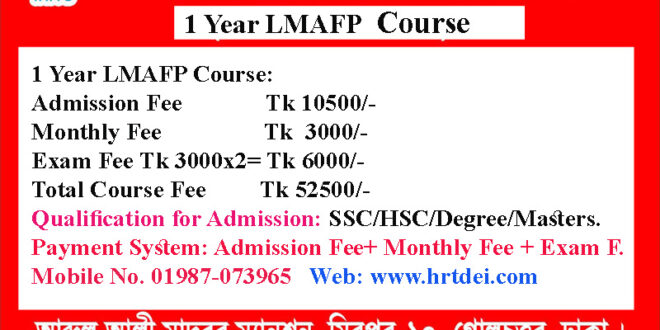
Local Medical Assistant & Family Planning (LMAFP Course) 1 Year Details
Course Fee LMAFP Course in Dhaka
LMAFP Course in Dhaka. Mobile No. . 01987-073965, 01797-522136. LMAFP 1 Year Couse Fee Tk 52500/-. LMAFP means Local Medical Assistant & Family Planning.
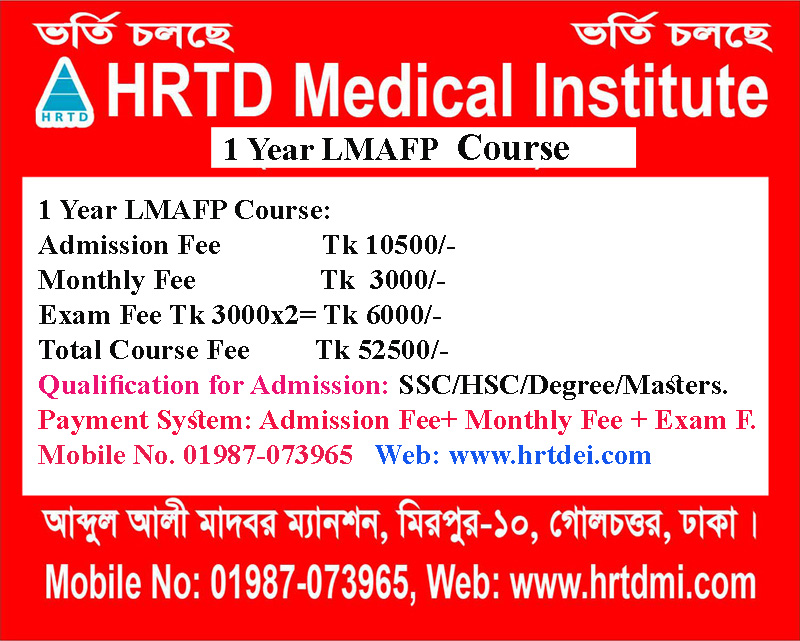
Admission in HRTD Medical Institute of LMAFP Course in Dhaka
LMAFP Course in Dhaka Admission in Dhaka. Every Month We Start a New Batch for LMAFP Course. Class Day: Monday or Friday. Morning Shift From 9:00 AM to 12:00 PM. Evening Shift 3:00 PM to 6:00 PM. Weekly Class 3 Hours.
Location of LMAFP Course in Dhaka
LMAFP Course in Dhaka Location. Mobile No. 01987-073965, 01797-522136. HRTD Medical Institute, Abdul Ali Madbor Mansion, Section-6, Block-Kha, Road-1, Plot-11, Metro Rail Piller No. 249. Dhaka-1216.
Summary in HRTD Medical Institute of LMAFP Course in Dhaka
- Course Summary :
- Total Subjects: 10
- Total Exam Marks: 1000
- Total Semester: 2
1’st Semester of LMAFP Course in Dhaka
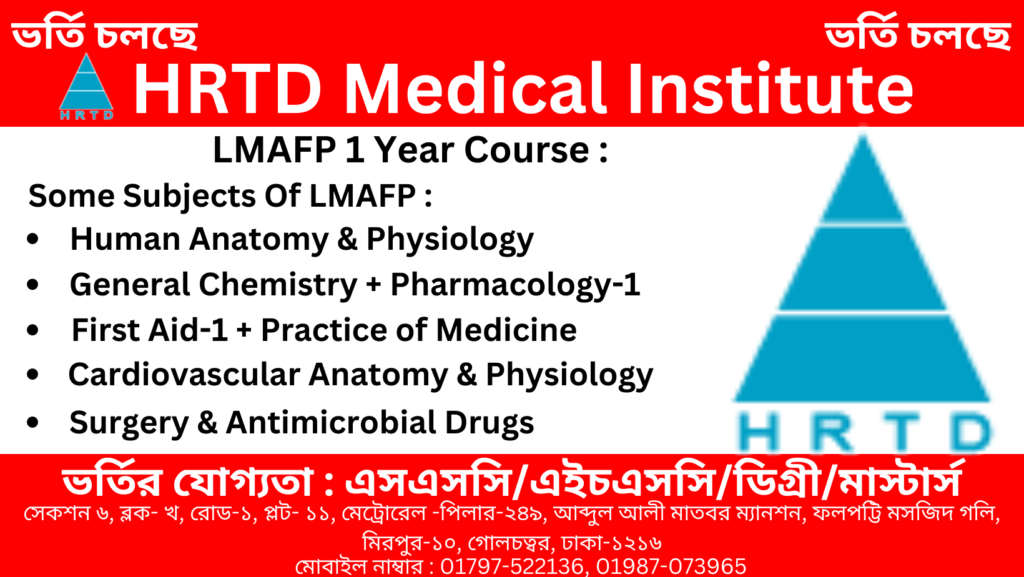
- Human Anatomy & Physiology……………………..…..Marks-100
- General Chemistry + Pharmacology-1……………….Marks-100
- First Aid-1 + Practice of Medicine…………………..….Marks-100
- Hematology + Pathology for Medical Practice…..Marks-100
- Study of OTC Drugs…………………………………………..…Marks-100
2’nd Semester of LMAFP Course in Dhaka
- Cardiovascular Anatomy & Physiology………….……Marks-100
- Orthopedic Anatomy & Physiology………….…………Marks-100
- General Chemistry & Biochemistry………….…………..Marks-100
- Medical Diagnosis….…………………………………..…………Marks-100
- Surgery & Antimicrobial Drugs……..…………..………..Marks-100
1 Year In Bangladesh for LMAFP Course in Dhaka
- Classes :
- One Class in a week.
2. Total Classes ( 3 × 48 )
1 Year In Mirpur for LMAFP Course in Dhaka
- Cost Summary :
- Total Course Fee : 52,500 /-
- Admission Fee :10,500 /-
- Monthly Fee : (12 × 3000)=36000/-
- Exam Fee : (2 x3000)= 6000 /-
Document for LMAFP Course in Dhaka
LMAFP Course in Dhaka for HRTD Medical Institute Photocopy of Certificate, Photocopy of NID, Passport Size Photo 4 Pcs. Without NID, a Birth Certificate is allowed for an emergency case.
Admission Eligibility for LMAFP Course in Dhaka
LMAFP Course in Dhaka Admission Eligibility. Mobile Number. 01987073965. 01941123488, 01797522136. SSC or Equivalent/HSC/ Degree/ Masters from any Background (Science/ Arts/ Commerce/ Technical).
Class System for LMAFP Course in Dhaka
Class System for LMAFP Course in Dhaka : Weekly Class 3 hours. For Job holders 3 hours in a day. The option days are Friday Morning Shift from 9:00 AM to 12:00 PM, Friday Evening Shift from 3:00 PM to 6:00 PM, Monday Morning Shift from 9:00 AM to 12:00 PM, Monday Evening Shift from 3:00 PM to 6:00 PM. Saturday Morning Shift from 10am to 1 Pm, Evening Shift from 3 pm to 6 pm.
For Regular Students Saturday 1 hour, Monday 1 hour, and Friday 1 hour. Morning Shift From 9:00 AM to 12:00 PM, and Evening Shift From 3:00 PM to 6:00 PM.
Hostel Facilities in HRTD Medical Institute for LMAFP Course in Dhaka
Hostal & Meal Facilities
The Institute has hostel facilities for the students. Students can take a bed in the hostel.
Hostel Fee Tk 3000/- Per Month
Meal Charges Tk 3000/- Per Month. ( Approximately )
হোস্টাল ও খাবার সুবিধা
ইনস্টিটিউটে শিক্ষার্থীদের জন্য হোস্টেল সুবিধা রয়েছে। ছাত্ররা হোস্টেলে বিছানা নিতে পারে।
হোস্টেল ফি 3000/- টাকা প্রতি মাসে,
খাবারের চার্জ 3000/- টাকা প্রতি মাসে।(প্রায়)
Address of HRTD Medical Institute for LMAFP Course in Dhaka
আমাদের ঠিকানাঃ HRTD মেডিকেল ইন্সটিটিউট, আব্দুল আলী মাদবর ম্যানশন, সেকশন ৬, ব্লোক খ, রোড ১, প্লট ১১, মেট্রোরেল পিলার নাম্বার ২৪৯, ফলপট্টি মসজিদ গলি, মিরপুর ১০ গোলচত্ত্বর, ঢাকা ১২১৬ । মোবাইল ফোন নাম্বার ০১৭৯৭৫২২১৩৬, ০১৯৮৭০৭৩৯৬৫ ।
Our Address: HRTD Medical Institute, Abdul Ali Madbor Mansion, Section-6, Block- Kha, Road- 1, Plot- 11, Metro Rail Pilar No. 249, Falpatty Mosjid Goli, Mirpur-10 Golchattar, Dhaka 1216. Mobile Phone No. 01797522136, 01987073965.
Anatomy & Physiology for LMAFP Course in Dhaka
Anatomy & physiology are important part of LMAFP course. The study of body structure and its functions of anatomy and physiology. Different systems of human body and its organs, tissue and cells. The systems of human body are Digestive system, Respiratory system, Cardiovascular system, Nervous system, Muscular system, Endocrine system, Urinary system, Reproductive system, Immune system, Lymphatic system, Skeletal system.
Anatomy and physiology (A&P) are the twin biological sciences: Anatomy studies the body’s structures (cells, tissues, organs, systems), while Physiology studies how these structures function and work together to sustain life, explaining the ‘how’ behind the ‘what’. A&P explores the body’s physical makeup (anatomy) and its processes (physiology) using principles from chemistry and physics, forming a foundational understanding for health, medicine, and life sciences.
Anatomy (Structure) of
- Definition: The study of the body’s forms, parts, and their relationships, from microscopic levels (cells) to macroscopic (organs, systems).
- Examples: Identifying bones, muscles, organs, or the specific tissues within the heart.
Physiology (Function)
- Definition: The study of how body parts work, function, and interact to perform life processes.
- Examples: How the heart pumps blood, how kidneys form urine, or how nerves transmit signals.
The Connection: Structure Determines Function
- These fields are inseparable; a structure’s anatomy dictates its function, and understanding both provides a complete picture of the body.
- Example: The heart’s chambers (anatomy) allow it to pump blood efficiently (physiology).
Key Concepts & Systems of Local Medical Assistant & Family Planning | LMAFP Course | 1 Year
- Systems-Oriented Approach: Studying major systems like the circulatory, nervous, digestive, respiratory, and musculoskeletal systems.
- Homeostasis: The body’s ability to maintain a stable internal environment (e.g., blood sugar, temperature).
- Feedback Loops: Mechanisms like negative (stabilizing) and positive (amplifying) feedback that regulate bodily functions.
In essence, anatomy is the body’s blueprint, and physiology is the instruction manual for how it operates.
Pharmacology for LMAFP Course in Dhaka
The study of drugs and medicine is called pharmacology. Drugs are chemicals that can react with cells, tissue and body organs . Common groups of drugs are antiulcer, anti vomiting, anti diarrhea , anti protozoal, anti fungal, anti viral, Laxative drug, NSAID, Motility, antimotility, anti biotic, Steroid drug, anthelmintic, Analgesic drug, antihypertensive drug.
Pharmacology is the scientific study of drugs and chemicals, exploring how they interact with living systems, their effects on the body (therapeutic and toxic), their mechanisms, and how organisms process them, bridging basic sciences like biology and chemistry with medicine to develop and use medicines safely and effectively. It covers drug discovery, development, actions, uses (like preventing, diagnosing, treating disease), and toxicity, forming the basis for treatment in various medical fields.
Core Aspects
- Pharmacokinetics (PK): What the body does to the drug (Absorption, Distribution, Metabolism, Excretion – ADME).
- Pharmacodynamics (PD): What the drug does to the body (mechanisms, effects, interactions at molecular/cellular levels).
- Toxicology: The study of harmful effects of chemicals and drugs.
Key Areas
- Drug Action: How drugs work at molecular and cellular levels.
- Drug Development: Discovery, design, and testing of new therapies.
- Therapeutic Use: Using drugs to treat or prevent illness.
- Biological Processes: Using drugs as tools to understand biology.
Sub-disciplines
- Clinical Pharmacology: Drug study in humans, advancing treatments.
- Cardiovascular Pharmacology: Drugs affecting the heart and vessels.
- Neuropharmacology: Drugs affecting the nervous system.
- Pharmacogenetics/Genomics: Genetic variations in drug response.
Importance
Pharmacology provides the scientific foundation for medicine, ensuring drugs are developed, regulated, and used effectively to improve health while minimizing harm, crucial for fields from oncology to neuroscience
First Aid for LMAFP Course in Dhaka
First aid is an important subject of all course for LMAFP. Here we discuss the topic of shock, classification of shock, causes of shock, bleeding, burning, dog bite, snake bite, poisoning, road traffic accident, dressing, bandaging, wound, fracture.
First aid is the immediate, temporary care given to a person who is injured or becomes suddenly ill before professional medical help arrives. Its primary goals, often called the “Three Ps,” are to Preserve life, Prevent the condition from worsening, and Promote recovery.
The DRSABCD Action Plan
In any emergency, follow this standard sequence to ensure safety and effectiveness:
- D – Danger: Ensure the area is safe for yourself, bystanders, and the victim.
- R – Response: Check if the person is conscious by loudly asking their name or gently squeezing their shoulder.
- S – Send for help: Call emergency services or ask someone else to do so.
- A – Airway: Check if their mouth and throat are clear. Gently tilt their head back to open the airway.
- B – Breathing: Look, listen, and feel for normal breathing for 10 seconds. If they are breathing normally, place them in the recovery position.
- C – CPR: If they are not breathing, start Cardiopulmonary Resuscitation (CPR) with 30 chest compressions followed by 2 rescue breaths.
- D – Defibrillation: If an Automated External Defibrillator (AED) is available, attach it immediately and follow the voice prompts.
Essential First Aid Skills
- Choking: Perform the Heimlich maneuver (abdominal thrusts) for adults or back blows for infants.
- Bleeding: Apply firm, direct pressure to the wound with a clean cloth or bandage. Elevate the injury if possible.
- Burns: Cool the area under running water for at least 20 minutes. Cover loosely with a sterile dressing.
- Fractures: Keep the injured limb as still as possible; do not try to straighten it.
- Stroke: Use the FAST guide: check for Facial drooping, Arm weakness, Speech difficulty, and Time to call emergency services.
Recommended First Aid Kit Supplies
A well-stocked kit should be kept at home, in the car, and at work. Standard contents include:
OTC drug for LMAFP Course in Dhaka
OTC full meaning Over The Counter . The study of OTC drugs are important drug for LMAFP course. These drugs can be sold or purchased without any prescription from registered MBBS doctors. These drug are emergency and safe for the patients. Some important OTC drugs are paracetamol, Ascorbic acid, Multivitamin, Vitamin B complex, Albendazole, Antacid, Chloroxylenol, Condom, Omeprazole, Oral Rehydration salt, Gentian violet, Metronidazole, Glycerin suppository etc.
An OTC (Over-the-Counter) drug is a medicine sold directly to consumers without needing a doctor’s prescription, used for treating minor ailments like pain, colds, or allergies, and is considered safe and effective for self-use when label instructions are followed, but still carries risks if misused. These medicines are available in pharmacies, supermarkets, and health stores, and can range from simple painkillers (acetaminophen/aspirin) to treatments for acne or indigestion, with regulatory bodies like the FDA ensuring their safety and efficacy.
Key Characteristics
- No Prescription Needed: Can be bought directly by consumers.
- Self-Care: Allows people to manage mild health issues themselves.
- Examples: Pain relievers (ibuprofen, acetaminophen), cough/cold meds, antacids, allergy meds, acne creams.
- Safety: Considered safe and effective at recommended doses, but can have side effects or interactions, requiring label reading and pharmacist advice.
- Regulation: Regulated by government agencies (like the FDA in the U.S.) to ensure quality and safety.
Important Considerations:
- Read the Label: Always follow dosing and usage instructions carefully.
- Talk to a Pharmacist: Consult them if you’re unsure if it’s right for you or if you’re taking other medications.
- Potential for Misuse: Higher doses can lead to serious health problems, as noted by the National Institute on Drug Abuse (NIDA).
Hematology and Pathology for LMAFP Course in Dhaka
Hematology and Pathology of important subject of medical science. The study of blood is called hematology and the study of pathos is called pathology. Hematology and pathology we discuss blood cell, blood disease, ESR, Hemoglobin, Pathological tests like TC, DC,
Hematology is the branch of medicine and science focused on the study of blood, blood-forming organs (like bone marrow), and blood disorders, encompassing the diagnosis, treatment, and prevention of conditions affecting red cells, white cells, platelets, and clotting mechanisms, such as anemia, leukemia, hemophilia, and thrombosis. It involves laboratory analysis (hematopathology) and clinical care (hematology) for both benign and malignant conditions, making it a crucial field for understanding overall health.
Key Areas of Study
- Blood Components: Red blood cells (oxygen transport), white blood cells (immune defense), platelets (clotting), and plasma (fluid, proteins).
- Blood-Forming Organs: Bone marrow, spleen, lymph nodes, and thymus.
- Diseases: Anemias, leukemia, lymphoma, multiple myeloma, bleeding disorders (hemophilia, clotting issues), and thrombosis (blood clots).
- Processes: Hematopoiesis (blood cell formation), coagulation (clotting), and immune responses involving blood cells.
Roles in Hematology
- Hematologist: A physician who diagnoses and treats patients with blood disorders, often working closely with oncologists in combined training.
- Hematopathologist: A pathologist specializing in diagnosing blood diseases through microscopic and advanced laboratory analysis of blood, bone marrow, and lymphoid tissues.
What Hematology Involves
- Clinical Care: Managing patients with chronic conditions like sickle cell disease or acute issues like leukemia.
- Laboratory Diagnostics: Performing tests like blood smears, flow cytometry, and genetic analysis to identify abnormalities.
- Research: Developing new drugs and treatments, understanding disease mechanisms, and improving diagnostic tools.
Pathology for LMAFP Course in Dhaka
Pathology is the medical specialty and scientific field dedicated to the study of disease. It serves as the “bridge” between science and medicine, examining how diseases originate, their development (pathogenesis), and the structural and functional changes they cause in cells, tissues, and organs
Key Branches of Pathology
Modern pathology is broadly divided into two main categories:
- Anatomic Pathology: Focuses on the diagnosis of disease through the macroscopic and microscopic examination of organs and tissues, typically obtained via biopsies, surgeries, or autopsies.
- Clinical Pathology: Also known as laboratory medicine, it involves the analysis of bodily fluids (such as blood, urine, or cerebrospinal fluid) using chemistry, microbiology, and hematology.
Major Subspecialties
- Histopathology: The microscopic examination of whole tissues to identify cellular patterns of disease.
- Cytopathology: The study of individual cells or small cell clusters, often used for cancer screenings like Pap smears.
- Molecular Pathology: A cutting-edge field that examines molecules (DNA, RNA, and proteins) within tissues to identify genetic mutations and guide personalized treatment.
- Forensic Pathology: Investigates the cause of sudden, suspicious, or violent deaths through post-mortem examinations (autopsies).
- Hematopathology: Specializes in diseases of the blood, bone marrow, and lymph nodes, such as leukemia and lymphoma.
- Microbiology: Focuses on identifying infectious agents like bacteria, viruses, fungi, and parasites to determine the best antibiotic or antiviral treatments.
Role of a Pathologist
A pathologist is a specialized medical doctor who interprets laboratory tests and examines tissues to provide a definitive diagnosis. They play a critical role in:
- Diagnosis: Confirming whether a growth is cancerous or identifying an infection.
- Prognosis: Predicting the likely course and outcome of a disease.
- Treatment Guidance: Recommending specific therapies based on the biological characteristics of a patient’s disease.
- Research: Advancing medical knowledge through the study of disease mechanisms and the development of new diagnostic tools.
Practical Class for LMAFP Course in Dhaka
Auscultation, Heart Beat, Heart Rate, Heart Sound, Pulse, Blood Pressure, Respiratory Rate, Inhaler, Rota Haler, Nebulizer, Blood Oxygen, Blood Grouping, Hand washing, CPR, Cyanosis, Blood Glucose (Diabetes), Body Temperature, Dehydration Test, Edema Test, IM Injection, IV Injection, Saline Infusion, Cleaning, Dressing, Bandaging. If you want to complete your course of LMAFP Course in Dhaka, please contact with us.
- Heart Beat, Heart Rate
- Heart Sound, Pulse
- Blood Pressure, Hypertension, Hypotension
- First Aid Box
- Auscultation
- Inhaler, Rota haler
- Nebulizer
- Glucometer Blood Glucose
- Injection I/V
- Injection I/M
- Cleaning, Dressing, Bandaging
- Saline
- CPR
- Stitch
- Body Temperature
- Nasal Tube Gel, Hand Wash
- Blood Grouping
- Cyanosis, Dehydration Test, Edema Test
Teachers for LMAFP Course in Dhaka
- Dr. Md. Sakulur Rahman, MBBS, CCD (BIRDEM), Course Director
- Dr. Sanjana Binte Ahmed, BDS, MPH, Assistant Course Director
- Dr. Tisha, MBBS, PGT Gyne, Assistant Course Director
- Dr. Suhana, MBBS, PGT Medicine
- Dr. Danial Hoque, MBBS,
- Dr. Tisha, MBBS
- Dr. Afrin Jahan, MBBS, PGT Medicine
- Dr. Ananna, MBBS
- Dr. Lamia Afroze, MBBS
- Dr. Amena Afroze Anu, MBBS, PGT Gyne, Assistant Course Director
- Dr. Farhana Antara, MBBS,
- Dr. Nazmun Nahar Juthi, BDS, PGT
- Dr. Farhana Sharna, MBBS
- Dr. Bushra, MBBS
- Dr. Turzo, MBBS
- Dr. Kamrunnahar Keya, BDS, PGT (Dhaka Dental College)
- Dr. Shamima, MBBS, PGT Gyne
- Dr. Alamin, MBBS
- Dr. Benzir Belal, MBBS
- Dr. Disha, MBBS
- Dr. Mahinul Islam, MBBS
- Dr. Tisha, MBBS, PGT Medicine
- Dr. Anika, MBBS, PGT
- Dr. Jannatul Ferdous, MBBS, PGT Gyne
- Dr. Jannatul Aman, MBBS, PGT
- Dr. Rayhan, BPT
- Dr. Abu Hurayra, BPT
- Dr. Sharmin Ankhi, MBBS, PGT Medicine
- Md. Monir Hossain, B Pharm, M Pharm
- Md. Monirul Islam, B Pharm, M Pharm
- Md. Feroj Ahmed, BSc Pathology, PDT Medicine

3 comments
Pingback: Best Diploma in Medical Science (DMSc) Course in Bangladesh - MATCDHAKA - Medical Assistant Training Centre in Dhaka
Pingback: LMAF Courses in Bangladesh. Mobile No. 01987-073965...
Pingback: Best LMAF course (local medical assistant and family welfare) 1 Years