 MATCDHAKA – Medical Assistant Training Centre in Dhaka Pharmacy, Veterinary, Dental, Nursing, Pathology, Physiotherapy and Homeopathy Training Institute in Dhaka



RMP Course 6 Month Details
RMP Course 6 Month In Mirpur HRTD Medical Institute : Mobile Number. 01987073965, 01797522136. Hotline- 01969947171.The full Meaning . A course of 6 month duration is a Short Type of in Bangladesh This Course contains 5 subjects in 6 month. The Subjects are Anatomy & Physiology, Pharmacology-1, Study of OTC Drugs, First Aid, Practice of Medicine,Hematology-1 & Practice of Medicine.
Location of RMP Course 6 Month
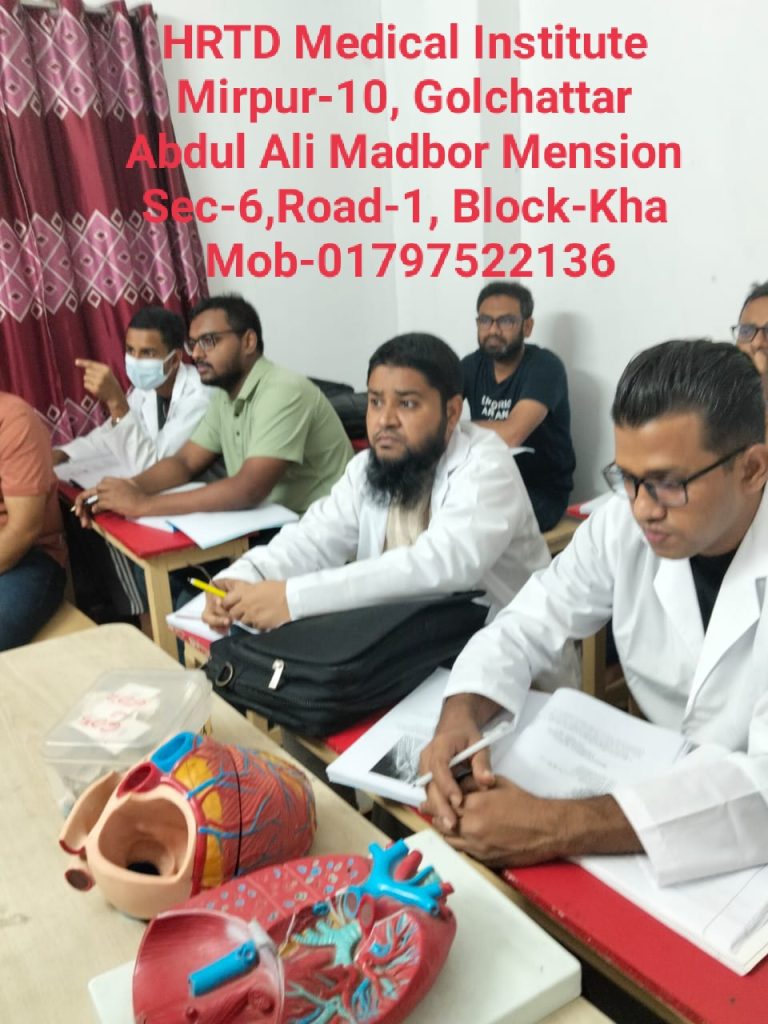
Location of RMP Course 6 Month Training Institute. Mobile Number.01987073965. 01941123488, 01797522136. HRTD Medical Institute , Abdul Ali Madbor Mention, Section-6, Block-Kha, Road-1, Plot-11, Mirpur-10 (Gol-Chattar) Metro Rail Pilar NO-249, Dhaka-1216. It is situated by the West Side of Agrani Bank, the South Side of Fire Service, Islami Bank, Janata Bank, Social Islami Bank, Medinova, Ibrahim Diabetic Hospital, the North Side of Baitul Mamur Jame Mosjid, Grave of Baitul Mamur Jame Mosjid, and East Side of Maliha Apartment.
Course fee RMP Course 6 Month
RMP Course 6 Month In Mirpur. Mobile Number. 01987073965. 01941123488, 01797522136. LMAF 6 Month Course Fee TK 26,500/- Including Admission Fee, Monthly Fee & Exam Fee.
RMP Course 6 Month In Mirpur Admission Eligibility in Dhaka, Bangladesh
RMP Course 6 Month In Mirpur Admission Eligibility. Mobile Number. 01987073965. 01941123488, 01797522136. SSC or Equivalent/HSC/ Degree/ Masters from any Background (Science/ Arts/ Commerce/ Technical).
Document for admission in RMP Course 6 Month
RMP Course 6 Month In Mirpur. Mobile No: 01987-073965, 01797-522136. HRTD Medical Institute.
Photocopy of Certificate, Photocopy of NID, Passport Size Photo 4 Pcs. Without NID, a Birth Certificate is allowed for an emergency case.
Hostel Facilities in HRTD Medical Institute for RMP Course 6 Month
Hostal & Meal Facilities
The Institute has hostel facilities for the students. Students can take a bed in the hostel.
Hostel Fee Tk 3000/- Per Month
Meal Charges Tk 3000/- Per Month. ( Approximately )
হোস্টাল ও খাবার সুবিধা
ইনস্টিটিউটে শিক্ষার্থীদের জন্য হোস্টেল সুবিধা রয়েছে। ছাত্ররা হোস্টেলে বিছানা নিতে পারে।
হোস্টেল ফি 3000/- টাকা প্রতি মাসে,
খাবারের চার্জ 3000/- টাকা প্রতি মাসে।(প্রায়)
Class System for RMP Course 6 Month
Class System for RMP Course 6 Month In Mirpur : Weekly Class 3 hours. For Job holders 3 hours in a day. The option days are Friday Morning Shift from 9:00 AM to 12:00 PM, Friday Evening Shift from 3:00 PM to 6:00 PM, Monday Morning Shift from 9:00 AM to 12:00 PM, Monday Evening Shift from 3:00 PM to 6:00 PM. Saturday Morning Shift from 10am to 1 Pm, Evening Shift from 3 pm to 6 pm.
For Regular Students Saturday 1 hour, Monday 1 hour, and Friday 1 hour. Morning Shift From 9:00 AM to 12:00 PM, and Evening Shift From 3:00 PM to 6:00 PM.
Subjects For RMP Course 6 Month
RMP Course 6 Month In Mirpur Contains 5 Subject.
- 1.Human Anatomy & Physiology,
- Pharmacology-1,
- Study of OTC,
- First Aid 1 &2 and Practice of Medicine,
- Hematology & Pathology for Medical Practice.
Teachers For RMP Course 6 Month
- Dr. Md. Sakulur Rahman, MBBS, CCD (BIRDEM), Course Director
- Dr. Sanjana Binte Ahmed, BDS, MPH, Assistant Course Director
- Dr. Tisha, MBBS, PGT Gyne, Assistant Course Director
- Dr. Suhana, MBBS, PGT Medicine
- Dr. Danial Hoque, MBBS, C-Card
- Dr. Tisha, MBBS
- Dr. Afrin Jahan, MBBS, PGT Medicine
- Dr. Ananna, MBBS
- Dr. Lamia Afroze, MBBS
- Dr. Amena Afroze Anu, MBBS, PGT Gyne, Assistant Course Director
- Dr. Farhana Antara, MBBS,
- Dr. Nazmun Nahar Juthi, BDS, PGT
- Dr. Farhana Sharna, MBBS
- Dr. Bushra, MBBS
- Dr. Turzo, MBBS
- Dr. Kamrunnahar Keya, BDS, PGT (Dhaka Dental College)
- Dr. Shamima, MBBS, PGT Gyne
- Dr. Alamin, MBBS
- Dr. Benzir Belal, MBBS
- Dr. Disha, MBBS
- Dr. Mahinul Islam, MBBS
- Dr. Tisha, MBBS, PGT Medicine
- Dr. Anika, MBBS, PGT
- Dr. Jannatul Ferdous, MBBS, PGT Gyne
- Dr. Jannatul Aman, MBBS, PGT
- Dr. Rayhan, BPT
- Dr. Abu Hurayra, BPT
- Dr. Sharmin Ankhi, MBBS, PGT Medicine
- Md. Monir Hossain, B Pharm, M Pharm
- Md. Monirul Islam, B Pharm, M Pharm
- Md. Feroj Ahmed, BSc Pathology, PDT Medicine
Practical Work For RMP Course 6 Month
- Heart Beat, Heart Rate
- Heart Sound,Pulse
- Blood Pressure, Hypertension, Hypotension
- First Aid Box
- Auscultation
- Inhaler, Rotahaler
- Nebulizer
- Glucometer Blood Glucose
- Injection I/V
- Injection I/M
- Cleaning,Dressing,Bandaging
- Saline
- CPR
- Stitch
- Body Temperature
- Nasal Tube Gel ,Hand Wash
- Blood Grouping
- Cyanosis, Dehydration Test, Edema Test
Subjects for RMP Course 6 Month
RMP Course 6 Month In Mirpur. Mobile Number: 01987-073965,01797-522136
- Human Anatomy & Physiology-1
- Pharmacology-1
- Study of OTC Drugs
- First Aid-1 & 2
- Practice of Medicine
- Hematology-1
- Pathology for Medical Practice
Practical Class Details for RMP Course 6 Month
1. Heart Beat Practical for RMP Course 6 Month
Definition
Heart beat is one complete cycle of heart contraction and relaxation that pumps blood throughout the body.
What happens in one heart beat?
- Systole – heart contracts → blood is pumped out
- Diastole – heart relaxes → heart fills with blood
Normal heart beat sounds
- “Lub” (S1) – closing of mitral & tricuspid valves
- “Dub” (S2) – closing of aortic & pulmonary valves
Function
- Supplies oxygen & nutrients
- Removes waste products
- Maintains blood pressure
2. Heart Rate Practical for RMP Course 6 Month
Definition
Heart rate is the number of heart beats per minute (bpm).
Normal Heart Rate (Resting)
| Age Group | Normal Heart Rate |
|---|---|
| Newborn | 120–160 bpm |
| Infant | 100–140 bpm |
| Child | 80–120 bpm |
| Adult | 60–100 bpm |
| Athlete | 40–60 bpm |
3. Difference Between Heart Beat & Heart Rate
| Feature | Heart Beat | Heart Rate |
|---|---|---|
| Meaning | One pumping cycle | Beats per minute |
| Unit | Single beat | bpm |
| Example | 1 contraction + relaxation | 72 beats/min |
4. Measurement of Heart Rate
Sites
- Radial artery (wrist)
- Carotid artery (neck)
- Apical (stethoscope)
Methods
- Palpation
- Auscultation
- ECG / Monitor
5. Abnormal Heart Rate
Tachycardia
- Heart rate >100 bpm
- Causes: fever, anxiety, exercise, anemia
Bradycardia
- Heart rate <60 bpm
- Causes: athletes, sleep, heart disease
Blood Pressure Practical for RMP Course 6 Month
Definition: Blood Pressure is the force exerted by circulating blood on the walls of arteries during heart contraction and relaxation.
1. Systolic Blood Pressure (SBP)
- Pressure during ventricular contraction
- Normal: ~ 120 mmHg
2. Diastolic Blood Pressure (DBP)
- Pressure during ventricular relaxation
- Normal: ~ 80 mmHg
Units of Blood Pressure
- Measured in millimeters of mercury (mmHg)
Normal Blood Pressure Values
| Category | Systolic (mmHg) | Diastolic (mmHg) |
|---|---|---|
| Normal | <120 | <80 |
| Elevated | 120–129 | <80 |
| Hypertension Stage-1 | 130–139 | 80–89 |
| Hypertension Stage-2 | ≥140 | ≥90 |
| Hypotension | <90 | <60 |
Factors Affecting Blood Pressure
- Age
- Exercise
- Stress & emotions
- Body weight
- Diet (salt intake)
- Smoking & alcohol
- Diseases (heart, kidney)
- Drugs
Measurement of Blood Pressure
Instruments
- Sphygmomanometer
- Stethoscope
- Digital BP machine
Sites
- Brachial artery (most common)
Method
- Auscultatory method
- Palpatory method
Abnormal Blood Pressure
Hypertension (High BP)
- BP ≥140/90 mmHg
- Causes: obesity, stress, smoking, kidney disease
- Complications: stroke, heart attack, kidney failure
Hypotension (Low BP)
- BP <90/60 mmHg
- Causes: dehydration, blood loss, shock
- Symptoms: dizziness, fainting
Nebulizer Practical for RMP Course 6 Month
Definition
Nebulization is a procedure in which liquid medicine is converted into fine mist (aerosol) and inhaled into the lungs for treatment of respiratory conditions.
Purpose / Indications
- Bronchial asthma
- COPD
- Bronchospasm
- Pneumonia
- Acute respiratory distress
- Thick respiratory secretions
Common Drugs Used
- Salbutamol (bronchodilator)
- Ipratropium bromide
- Budesonide
- Normal saline (0.9%)
Articles Required
- Nebulizer machine
- Nebulizer chamber
- Mask / mouthpiece
- Prescribed medication
- Normal saline
- Syringe / dropper
- Gloves
- Towel / tissue
Procedure (Practical Steps)
Before Procedure
- Explain procedure to patient
- Wash hands & wear gloves
- Check doctor’s order
- Assess respiratory status (RR, SpO₂, breath sounds)
- Place patient in sitting / semi-Fowler’s position
During Procedure
- Add prescribed drug into nebulizer chamber
- Add normal saline (total volume usually 3–5 ml)
- Connect chamber to mask & machine
- Switch on nebulizer
- Place mask properly on patient’s face
- Instruct patient to breathe slowly & deeply
- Continue until mist stops (≈ 5–10 minutes)
After Procedure
- Switch off nebulizer
- Remove mask
- Encourage patient to rinse mouth (especially after steroid)
- Clean & dry nebulizer parts
- Wash hands
- Document procedure & patient response
Glucometer Blood Glucose Practical for RMP Course 6 Month
A glucometer is a portable electronic device used for self-monitoring of blood glucose (SMBG), which is crucial for managing diabetes. It provides a quick snapshot of current blood sugar levels via a small finger-prick blood sample
গ্লুকোমিটার হল একটি বহনযোগ্য ইলেকট্রনিক ডিভাইস যা রক্তের গ্লুকোজ (SMBG) স্ব-পর্যবেক্ষণের জন্য ব্যবহৃত হয়, যা ডায়াবেটিস পরিচালনার জন্য অত্যন্ত গুরুত্বপূর্ণ। এটি একটি ছোট আঙুল দিয়ে কাটা রক্তের নমুনার মাধ্যমে বর্তমান রক্তে শর্করার মাত্রার দ্রুত স্ন্যাপশট প্রদান করে।
Equipment Needed
- Glucometer: The main electronic device that reads the test strip and displays the result.
- Test Strips: Small, disposable strips containing a chemical (usually an enzyme like glucose oxidase) that reacts with the blood’s glucose.
- Lancet: A small, sterile needle used to prick the skin to get a blood drop.
- Lancing Device: A pen-like device that holds the lancet and helps control the depth of the prick for comfort.
- Alcohol Swabs/Soap and Water: For cleaning the puncture site.
- Gauze/Cotton ball: To stop the bleeding after the prick.
- Sharps Container: A hard plastic container for safe disposal of used lancets.
Step-by-Step Practical Procedure
- Preparation: Wash your hands thoroughly with soap and warm water and dry them completely. This prevents contamination from food residue or other substances that could affect the reading.
- Insert the Test Strip: Take a new test strip from its container and insert it into the glucometer. The meter should turn on automatically and indicate it is ready for a blood sample (often with a flashing blood drop symbol).
- Prepare the Lancing Device: Insert a new, sterile lancet into the lancing device and set the penetration depth.
- Obtain Blood Sample: Prick the side of your fingertip (less painful than the pad) with the lancing device.
- Apply Blood: Gently massage your finger to form a small, round drop of blood. Touch the tip or edge of the test strip to the blood drop, and the strip will automatically draw in the required amount of blood.
- Read and Record: The meter will display your blood glucose level on the screen within a few seconds. Record the result in a log book, noting the time and any relevant factors like meals, exercise, or illness.
- Cleanup: Place a cotton ball or gauze on the puncture site until the bleeding stops. Dispose of the used test strip and lancet in a sharps container according to local guidelines.
Injection Practical for RMP Course 6 Month
An IV (intravenous) injection delivers fluids, medications, or blood products directly into a patient’s bloodstream via a needle or catheter inserted into a vein, offering the fastest way to get substances into the body for rapid effects, precise dosing, or long-term infusions. It’s used for emergencies, hydration, nutrition, and medications that need immediate or controlled distribution, avoiding the liver’s first-pass metabolism. While generally safe, risks include pain, swelling, infection, or allergic reactions, and the procedure requires trained healthcare professionals.
একটি IV (শিরাপথে) ইনজেকশন রোগীর রক্তপ্রবাহে সরাসরি তরল, ওষুধ বা রক্তের পণ্য সরবরাহ করে, যা শিরায় প্রবেশ করানো সুচ বা ক্যাথেটারের মাধ্যমে, দ্রুত প্রভাব, সঠিক ডোজ বা দীর্ঘমেয়াদী ইনফিউশনের জন্য শরীরে পদার্থ প্রবেশের দ্রুততম উপায় প্রদান করে। এটি জরুরি অবস্থা, হাইড্রেশন, পুষ্টি এবং লিভারের প্রথম-পাস বিপাক এড়িয়ে তাৎক্ষণিক বা নিয়ন্ত্রিত বিতরণের প্রয়োজন এমন ওষুধের জন্য ব্যবহৃত হয়। যদিও সাধারণত নিরাপদ, ঝুঁকির মধ্যে রয়েছে ব্যথা, ফোলাভাব, সংক্রমণ বা অ্যালার্জির প্রতিক্রিয়া এবং এই পদ্ধতির জন্য প্রশিক্ষিত স্বাস্থ্যসেবা পেশাদারদের প্রয়োজন।
How it Works & Types
- Method: A thin tube (cannula) is placed into a vein, often in the arm, allowing for a single injection followed by continuous or intermittent infusion of liquids.
- Single Injection: A quick shot of medication into the vein.
- IV Drip/Infusion: A bag of fluid or medication slowly drips into the vein over time, controlled by a roller clamp.
Common Uses
- Emergency Care: For life-saving medications or fluids when speed is critical.
- Hydration & Nutrition: To deliver fluids, electrolytes, or nutrients directly.
- Medication Delivery: For drugs that are irritating orally, need precise dosing, or require a large dose over time.
- Blood Transfusions: Administering blood products.
Risks & Side Effects
- Common: Pain, redness, swelling, or bruising at the site.
- Serious (Less Common): Infection, infiltration (fluid leaking into tissues), hematoma (blood collection), air embolism, or allergic reactions.
Key Steps (Simplified)
- Preparation: Verify patient, medication, and gather sterile supplies.
- Site Selection: Find a suitable vein, often in the arm.
- Insertion: Clean the skin and insert the needle/cannula into the vein.
- Connection: Attach the fluid line or administer the injection.
- Monitoring: Set the drip rate and watch for issues.
An intramuscular (IM) injection delivers medication deep into muscle tissue, allowing for rapid absorption into the bloodstream due to the muscle’s rich blood supply, making it faster than subcutaneous injections but slower than intravenous ones. Common sites include the deltoid, gluteal (buttocks), and vastus lateralis (thigh) muscles, chosen to avoid nerves and vessels. It’s used for vaccines and drugs needing quick, effective delivery, often avoiding the liver’s “first-pass” metabolism.
How It Works
- A needle passes through skin and fat into a muscle.
- Medication is quickly absorbed into the body’s circulatory system.
Common Sites
- Deltoid: Upper arm (for smaller volumes).
- Gluteal (Dorsogluteal/Ventrogluteal): Buttocks (requires careful landmarking).
- Vastus Lateralis: Thigh (often used in infants).
Key Advantages
- Faster Absorption: More blood vessels in muscles than subcutaneous tissue.
- Bypasses Liver: Avoids first-pass metabolism, improving drug effectiveness.
- For Larger Volumes: Can deliver more medication (2-5 mL) than subcutaneous shots.
Used For
- Vaccines (like flu shots).
- Certain hormones, antibodies, and pain medications.
- Oil-based medications or irritating solutions.
The Process (General Steps)
- Site Selection: Identify landmarks for the chosen muscle.
- Cleanse: Clean the skin with an antiseptic swab.
- Inject: Insert the needle quickly at a 90-degree angle into the muscle.
- Aspirate (Sometimes): Pull back the plunger slightly to check for blood (not always done for vaccines).
- Administer: Slowly push the medication.
- Withdraw & Pressure: Remove the needle and apply gentle pressure (no rubbing).
Subject Details for RMP Course 6 Month
Human Anatomy & Physiology for RMP Course 6 Month
The Study of the body Structure and its function is Anatomy & Physiology. Here we discuss the systems of the human body and its organ, Tissues, and cells. The systems of the human body are the digestive system, Respiratory system, Cardiovascular system, Skeletal system, Muscular system, nervous system, Endocrine system, Immune System, Integumentary System and Urinary System.
দেহ গঠন এবং এর কার্যকারিতা অধ্যয়নের বিষয় হল অ্যানাটমি এবং ফিজিওলজি। এখানে আমরা মানবদেহের সিস্টেম এবং এর অঙ্গ, টিস্যু এবং কোষ নিয়ে আলোচনা করব। মানবদেহের সিস্টেমগুলি হল পাচনতন্ত্র, শ্বাসযন্ত্র, হৃদযন্ত্র, কঙ্কালতন্ত্র, পেশীতন্ত্র, স্নায়ুতন্ত্র, অন্তঃস্রাবী ব্যবস্থা, রোগ প্রতিরোধ ব্যবস্থা, ইন্টিগুমেন্টারি সিস্টেম এবং মূত্রতন্ত্র।

Human anatomy is the scientific study of the body’s structural composition (cells, tissues, organs, systems), while physiology focuses on the functions and internal mechanisms of these structures. Together, they explore how the body maintains life, with the core principle that structure determines function (anatomy fits physiology).
মানব শারীরস্থান হল শরীরের কাঠামোগত গঠনের (কোষ, টিস্যু, অঙ্গ, সিস্টেম) বৈজ্ঞানিক অধ্যয়ন, যখন শারীরবিদ্যা এই কাঠামোর কার্যকারিতা এবং অভ্যন্তরীণ প্রক্রিয়াগুলির উপর দৃষ্টি নিবদ্ধ করে। একসাথে, তারা অন্বেষণ করে যে শরীর কীভাবে জীবন বজায় রাখে, মূল নীতিটি হল গঠন কার্যকারিতা নির্ধারণ করে (শারীরস্থান শারীরবিদ্যার সাথে খাপ খায়)।
Definition
Anatomy (English):
Anatomy is the study of the structure of the human body and the relationship between body parts.
অ্যানাটমি (বাংলা):
অ্যানাটমি হলো মানবদেহের গঠন, অঙ্গ-প্রত্যঙ্গ এবং তাদের পারস্পরিক সম্পর্কের অধ্যয়ন।
Physiology (English):
Physiology is the study of the functions of the human body and how body parts work.
ফিজিওলজি (বাংলা):
ফিজিওলজি হলো মানবদেহের বিভিন্ন অঙ্গ কীভাবে কাজ করে তার অধ্যয়ন।
Levels of Organization (শরীরের গঠনের স্তর)
- Cell (কোষ) – দেহের সবচেয়ে ছোট জীবিত একক
- Tissue (টিস্যু) – একই ধরনের কোষের সমষ্টি
- Organ (অঙ্গ) – বিভিন্ন টিস্যু দিয়ে গঠিত (যেমন: হৃদপিণ্ড)
- System (সিস্টেম) – একাধিক অঙ্গের সমন্বয়
- Organism (সম্পূর্ণ মানবদেহ)
Major Systems of Human Body
| System | Main Function |
|---|---|
| Skeletal System | দেহকে আকৃতি ও সাপোর্ট দেয় |
| Muscular System | চলাচল ও শক্তি উৎপাদন |
| Nervous System | দেহের নিয়ন্ত্রণ ও সমন্বয় |
| Cardiovascular System | রক্ত পরিবহন |
| Respiratory System | শ্বাস-প্রশ্বাস |
| Digestive System | খাদ্য হজম |
| Urinary System | বর্জ্য নির্গমন |
| Endocrine System | হরমোন নিঃসরণ |
| Reproductive System | প্রজনন |
| Integumentary System | ত্বক ও সুরক্ষা |
কয়েকটি সিস্টেম সম্পর্কে আলোচনা করা হলো:
1. Skeletal System for RMP Course 6 Month
The human skeletal system is a complex framework of 206 bones (in adults) that provides structural support, facilitates movement, and protects vital organs. It is more than just bones; it includes joints, cartilage, ligaments, and tendons.
মানুষের কঙ্কালতন্ত্র হল ২০৬টি হাড়ের (প্রাপ্তবয়স্কদের) একটি জটিল কাঠামো যা কাঠামোগত সহায়তা প্রদান করে, চলাচল সহজতর করে এবং গুরুত্বপূর্ণ অঙ্গগুলিকে রক্ষা করে। এটি কেবল হাড়ের চেয়েও বেশি কিছু; এর মধ্যে রয়েছে জয়েন্ট, তরুণাস্থি, লিগামেন্ট এবং টেন্ডন।
Function:
- Gives shape and support to the body
- Protects vital organs (brain, heart, lungs)
- Helps in body movement
- Produces blood cells in bone marrow
Main Parts:
- Bones (206 bones)
- Joints
- Cartilage
2. Muscular System for RMP Course 6 Month
The muscular system as your body’s engine room. It’s a vast network of over 600 muscles that do everything from the obvious (lifting weights) to the silent (keeping your heart beating).
পেশীতন্ত্র আপনার শরীরের ইঞ্জিন রুম হিসেবে কাজ করে। এটি ৬০০ টিরও বেশি পেশীর একটি বিশাল নেটওয়ার্ক যা স্পষ্ট (ওজন তোলা) থেকে শুরু করে নীরব (আপনার হৃদস্পন্দন বজায় রাখা) পর্যন্ত সবকিছু করে।
Function:
- Enables movement of the body
- Maintains posture
- Produces heat
Types of Muscles:
- Skeletal muscle – voluntary
- Smooth muscle – involuntary
- Cardiac muscle – found in the heart
3. Nervous System for RMP Course 6 Month
The nervous system is your body’s command center, a complex network of cells and nerves that carries messages between your brain and the rest of your body. It controls everything from voluntary movements like walking to involuntary processes like your heartbeat and digestion.
স্নায়ুতন্ত্র হল আপনার শরীরের কমান্ড সেন্টার, কোষ এবং স্নায়ুর একটি জটিল নেটওয়ার্ক যা আপনার মস্তিষ্ক এবং আপনার শরীরের বাকি অংশের মধ্যে বার্তা বহন করে। এটি হাঁটার মতো স্বেচ্ছাসেবী নড়াচড়া থেকে শুরু করে আপনার হৃদস্পন্দন এবং হজমের মতো অনিচ্ছাকৃত প্রক্রিয়া পর্যন্ত সবকিছু নিয়ন্ত্রণ করে।
Function:
- Controls and coordinates body activities
- Receives and responds to stimuli
- Responsible for thinking, memory, and emotions
Main Parts:
- Brain
- Spinal cord
- Nerves
4. Cardiovascular System for RMP Course 6 Month
The cardiovascular system, also known as the circulatory system, is an intricate network consisting of the heart, blood vessels, and blood. Its primary role is to act as a transportation hub, delivering oxygen, nutrients, and hormones to cells while removing waste products like carbon dioxide to maintain homeostasis.
হৃদযন্ত্র, যা সংবহনতন্ত্র নামেও পরিচিত, হৃৎপিণ্ড, রক্তনালী এবং রক্তের সমন্বয়ে গঠিত একটি জটিল নেটওয়ার্ক। এর প্রাথমিক ভূমিকা হল পরিবহন কেন্দ্র হিসেবে কাজ করা, কোষে অক্সিজেন, পুষ্টি এবং হরমোন সরবরাহ করা এবং একই সাথে কার্বন ডাই অক্সাইডের মতো বর্জ্য পদার্থ অপসারণ করে হোমিওস্ট্যাসিস বজায় রাখা।
Function:
- Circulates blood throughout the body
- Transports oxygen, nutrients, and hormones
- Removes waste products
Main Parts:
- Heart
- Blood
- Blood vessels (arteries, veins, capillaries)
5. Respiratory System for RMP Course 6 Month
The respiratory system is a biological network of organs and tissues that allows you to breathe, facilitating the vital exchange of oxygen and carbon dioxide.
শ্বসনতন্ত্র হল অঙ্গ এবং টিস্যুর একটি জৈবিক নেটওয়ার্ক যা আপনাকে শ্বাস নিতে সাহায্য করে, অক্সিজেন এবং কার্বন ডাই অক্সাইডের গুরুত্বপূর্ণ বিনিময়কে সহজতর করে।
Pharmacology for RMP Course 6 Month
The study of Drugs and Medicine is called Pharmacology. Drugs are chemicals that can react with cells, tissues, and body organs. Here we discuss group-wise drugs and their medicines. Common Groups of Drugs are Pain Killer Drugs, Anti Ulcer Drugs, Anti Vomiting Drugs, Anti Viral Drugs, Laxative Drugs, Motility Drugs and Antimotility Drugs, Bronchodilator Drugs, Antibiotic Drugs, Anti Fungal Drugs, Anti Thrombotic Drugs, Anti Protozoal Drugs, Anthelmintic Drugs, Anti Hypertensive Drugs, Beta Blocker Drugs, Calcium Channel Blocker Drugs, ACE Inhibitor Drugs, Hemostatic Drugs, Analgesic Drugs, Antipyretic Drugs, Steroid Drugs, NSAID Drugs, CNS Drugs, Neuropathic Pain Keller Drugs, Spasmodic Drugs, etc.
Core Branches of Pharmacology
The field is traditionally divided into two main areas that describe the relationship between a drug and the body:
- Pharmacodynamics (PD): Often described as “what the drug does to the body”. This involves studying the biochemical and physiological effects of drugs and their mechanisms of action, such as how they bind to specific receptors.
- Pharmacokinetics (PK): Often described as “what the body does to the drug”. It focuses on the ADME process: Absorption, Distribution, Metabolism, and Excretion.
Key Concepts
- Selectivity: The ability of a drug to affect a specific target without causing unintended side effects in other tissues.
- Therapeutic Window: The range of drug concentrations in the blood that provides the desired effect without reaching toxic levels.
- Clinical Pharmacology: The application of pharmacological principles to the treatment of patients, focusing on safe and economic use of medicines
First Aid for RMP Course 6 Month
First Aid is an important subject for all courses. It is very important for the RMP Course. Here we discuss Shock, Classifications of Shock, Causes of Shock, Stages of Shock, Clinical Features of Shock, Hypovolemic Shock, Cardiogenic Shock, Neurogenic Shock, Traumatic Shock, Burn Shock, Electric Shock, Psychogenic Shock, Anaphylactic Shock, First Aid of Shock, Management of Shock, First Aid of Cut, First of Snake Bite, First Aid of Accidental Injury, etc.
Common First Aid Situations RMP Course 6 Month
- Choking: For adults, give up to five sharp back blows followed by five abdominal thrusts (Heimlich maneuver).
- Bleeding: Apply firm, direct pressure with a clean cloth or gauze. If it soaks through, add more layers without removing the first one.
- Burns: Cool the burn under cool running water for at least 20 minutes.
- Unconsciousness: If breathing, place the person in the recovery position to keep the airway clear
Study of OTC Drugs for RMP Course 6 Month
OTC is the short form of over-the-counter. That is OTC Drugs are over-the-counter drugs. The study of OTC Drugs is important for RMP Courses. These Drugs can be sold or purchased without any prescription from Registered MBBS Doctors. These Drugs are Emergency and Safe for the patients. The study of OTC Drugs improves the quality of practice. Some OTC Drugs are Paracetamol, Albendazole, Ascorbic Acid, Calcium, Multivitamins, Vitamin B Complex, Omeprazole, Oral Rehydration Salt, Salbutamol, Mebendazole, Neomycin, Gentamycin, Bacitracin, etc.
Key Findings in OTC Drug Studies
- Prevalence of Use: Research indicates high usage rates, with one study showing that 78.9% of participants had taken or were currently taking OTC medications. Usage typically decreases with age, being most prevalent among younger populations.
- Most Common Categories: Analgesics (pain relievers) are consistently the most consumed OTC drugs, frequently used by women and younger individuals.
Risks and Safety Concerns RMP Course 6 Month
While OTC drugs provide accessible self-care, they carry significant risks if misused:
- Incorrect Diagnosis: Users may misidentify symptoms, leading to inappropriate drug choice.
- Adverse Reactions: High doses or prolonged use can cause side effects or severe allergic reactions.
- Drug-Drug Interactions: OTC medications can interact dangerously with prescription drugs or other OTC products.
- Delayed Diagnosis: Using OTC drugs to suppress symptoms can mask underlying serious conditions, leading to delayed professional medical intervention.
- Resistance and Dependency: Uncontrolled use, particularly of medications sometimes mistakenly sold without prescriptions in certain regions (like antibiotics), can contribute to drug resistance or dependency.
Hematology and Pathology for RMP Course 6 Month
Hematology and Pathology are important subjects in medical science. The study of Blood is called Hematology and the Study of Pathos is called Pathology. In Hematology and Pathology, we discuss blood cells, their morphology and functions, Blood Diseases, Common Pathos and their pathogenesis, Atrophy, Hypertrophy, Metaplasia, Gangrene, Pathological Tests like TC, DC, ESR, Hemoglobin Percentage, etc.
Key Components of Hematology
- Blood Composition Study: Analyzes red blood cells (oxygen transport), white blood cells (infection fighting), platelets (clotting), and plasma.
- Benign Hematology: Treats non-cancerous conditions like sickle cell anemia, iron deficiency, and hemophilia.
- Malignant Hematology: Focuses on blood cancers, often managed by hematologist-oncologists.
- Hematopathology: A sub-specialty focusing on analyzing blood, bone marrow, and lymph node tissues to identify diseases
Microbiology and Antimicrobial Drugs for RMP Course 6 Month
The Study of Microorganisms is called Microbiology. Microorganisms are the smallest living beings that cannot be seen without a microscope. The Drugs that are used for the treatment of Infectious Diseases are Antimicrobial Drugs. Microorganisms are Bacteria, Protozoa, Fungus, and Virus. Antimicrobial Drugs are Antibiotic Drugs ( Antibacterial Drugs), Anti Protozoal Drugs, Anti Fungal Drugs, and Anti Viral Drugs.
Practice of Medicine for RMP Course 6 Month
The study of Disease and Treatment is called the Practice of Medicine. Actually, the Practice of Medicine means the use of medicine for treatments. This subject is important for a Rural Medical Practitioner. This subject discusses some common diseases. The points of discussion for the Practice of Medicine are the Definition of Disease, Causes of Disease, Clinical Features of Disease ( Symptoms and Signs), Investigation of Disease, Treatment of Disease, Complication of Disease, and Advice for the Patients.